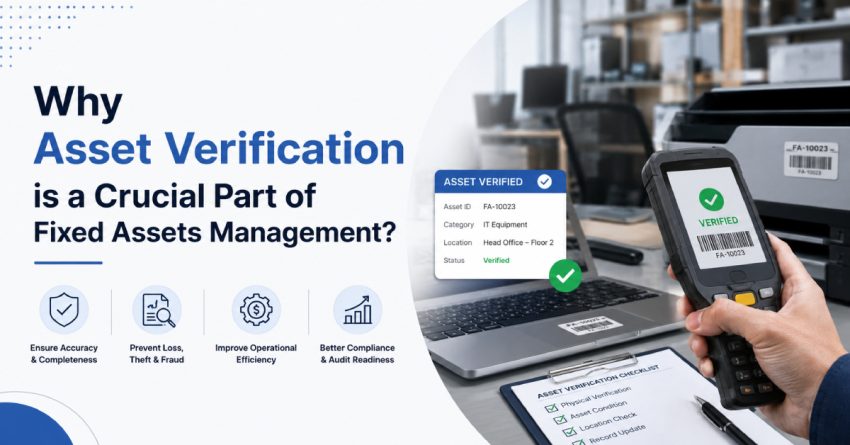
Businesses spend a lot of money to purchase equipment, machinery, vehicles, computers and office facilities. These assets are an important part of the business’ daily operation and long-term growth. But it’s not enough to just list assets on financial statements. The presence, condition and location of assets need to be regularly confirmed to ensure accurate records and efficient use of assets. Therefore, asset verification plays a crucial role in Fixed Assets Management, ensuring that organizations have effective control over their valuable assets and optimize their overall operating efficiency.
What is Asset Verification?
The Asset Verification process is the physical verification and validation of assets being held by an organization. It includes checking the assets that are present at the site against the asset registers and accounting systems.
The aim of this is to establish that each asset is present, in use and properly documented. This will help detect any discrepancies, including duplicates, missing assets, or incorrect asset location or data. Frequent verification makes sure that asset data is accurate and reliable.
Enhancing Accuracy of Financial Records
Part of the reason why it is so important to verify assets is that it has an impact on financial reporting. Correct data on assets is used by organizations to calculate depreciation, asset value, and financial statements.
Errors in asset records or out-of-date information can lead to financial reports inaccuracies. This can impact on business decisions, budgeting procedures, and compliance needs. Companies can verify financial records using these exercises on a regular basis to ensure that they correctly reflect the assets owned and used by the company.
Accurate records also enable transparency and add to the confidence of the stakeholders, auditors and investors.
Preventing Asset Loss and Misuse
Assets can be moved, broken, lost or stolen over time. Unless the verification process is in place, these problems can go unnoticed in businesses until they become an operational or financial problem.
Organizations can use asset verification to find out if assets are missing or underutilized, and act quickly to fix the situation. It also enhances accountability as every employee and department is held responsible for the assets placed under their care.
This helps to minimize the chances of unauthorized use, theft, or unnecessary asset acquisitions and enhance Fixed Assets Management practices.
Supporting Regulatory Compliance and Audits
There are numerous industries that have regulatory requirements that require the appropriate asset accounting and documentation. The asset records may be audited to ensure that the accounting standards and internal controls are followed.
Regular asset verifications help to ensure that the organization is properly managing its assets. It offers documented evidence of correct tracking, monitoring and reporting of assets.
Good verification processes also support businesses to comply with governance mandates and to ensure positive visibility with regulators and stakeholders.
Enhancing Asset Utilization and Planning
The asset verification will give useful information on use of resources throughout the organization. Businesses will be able to detect assets that are not being used, are outdated, or are not generating value.
This information will assist in the decision making for maintenance, upgrading, transferring or disposal of this asset. This clarity enables organizations to make informed decisions on resource allocation and prevent inefficient spending.
Conclusion
In essence, asset verification is not just an administrative task but an important activity that plays a significant role in ensuring financial accuracy, operational efficiency, compliance, and resource optimization. Frequent discrepancies between assets and records can lead to potentially limited risks, increased accountability and better-informed business decisions. As businesses invest in their assets, a comprehensive asset verification program is the foundation of effective asset control and future organization performance.