Introduction
The comparison between electric vehicles (EVs) and traditional fuel-powered vehicles has become increasingly important for Indian businesses in 2026. High fuel prices, growth in infrastructure for charging, and government backing of sustainable means of transport are making companies reconsider their approaches towards transport. From logistic firms and parcel service operators to corporate fleets and field sales staff, companies are trying to decide which one will be more profitable in the long run. Even though there are pros of each type of vehicle, the decision now goes beyond environmental factors, including issues of efficiency and cost-effectiveness. Recent developments in the market also suggest a rise in EV popularity among companies.
Understanding the Cost Difference
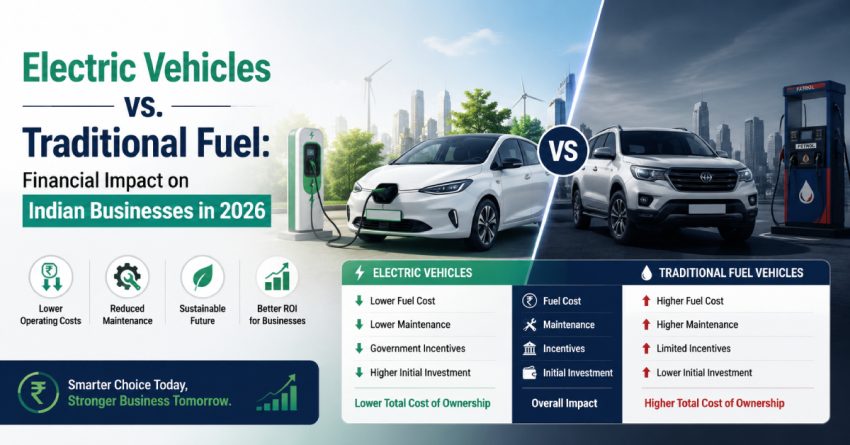
The major point of differentiation between electric cars and fuel-powered cars is their cost. Electric cars tend to be more expensive because of advanced battery technology. However, organizations nowadays pay attention not only to the cost of purchasing but also to the total cost of ownership.
In case an organization runs vehicles daily, cheaper cost of charging in comparison with petrol/diesel costs can help in making huge savings per year. Companies that have stable routes, for example, last-mile delivery organizations, can get the best out of this.
Operational Costs: Advantage of Electric Vehicles
Fuel is still one of the most significant ongoing costs for business fleets. In 2026, the varying cost of fuel continues to influence transport budgets in all industries. Electric vehicles offer a higher level of consistency regarding operational costs as the price of electricity is more stable compared to that of petrol or diesel.
Moreover, EVs have fewer components, which results in less maintenance. The vehicles do not require oil changes, mechanical repairs occur less frequently, and the braking system is less worn because of the use of regenerative braking.
Productivity and Business Processes
In addition, modern organizations are also taking productivity into account when comparing EVs and conventional cars. Developments in battery technology and growth in the number of charging stations have decreased range anxiety for various commercial applications.
Organizations that equip their office or warehouse space with charging stations can manage their fleets more easily and save on downtime. Fleet management systems coupled with EVs will give you a more detailed understanding of energy efficiency, routing, and maintenance.
Sustainability Adds to Financial Gain
There is increasing interest from customers, investors, and other business stakeholders in companies with good environmental reputations. Companies with all-electric fleets can enhance their brand reputation while meeting ESG objectives.
Increasingly, businesses are using sustainable performance when evaluating suppliers, which is a huge benefit for firms seeking to make long-term agreements. Sustainable transport could also aid in meeting government policies for clean mobility.
When Conventional Fuel Cars Are Still Practical
While the adoption of electric cars has been increasing, conventional fuel cars will continue to be practical choices for companies based in remote areas without charging facilities. Transport operations, which require long-distance drives, are still better served by diesel-powered trucks and other similar vehicles before more charging facilities are available.
Companies can use a step-by-step approach of using both conventional and electric vehicles simultaneously.
Conclusion
By 2026, electric vehicles are becoming an increasingly viable option for Indian businesses with predictable routes and suitable operating conditions, offering the potential for long-term operational savings. While EVs do require greater upfront expenditure compared to fuel vehicles, lower costs of energy usage, less maintenance costs, and enhanced sustainable credentials tend to provide better value for money in the long run. While conventional fuel vehicles have a role to play in fulfilling certain operational needs, it is evident that the future lies in adopting a more balanced approach to fleet vehicles wherein electric vehicles will play a greater part in saving costs and increasing business competitiveness.
Frequently Asked Question
Can EV fleet management improve operational efficiency?
Yes. Fleet-management tools can help track energy use, vehicle location, battery health, route efficiency, maintenance schedules, and driver performance for better operational control.
How can CAC help businesses evaluate EV fleet readiness?
CAC can support businesses in assessing fleet operations, cost structures, charging requirements, process gaps, and implementation risks to develop a practical EV-transition roadmap.
Why should businesses consider EV transition as a strategic decision?
An EV transition affects costs, operations, sustainability goals, infrastructure, workforce practices, and future competitiveness. A structured strategy helps businesses adopt the right model at the right pace.
Are electric vehicles financially beneficial for Indian businesses in coming years?
For businesses with regular, predictable routes, EVs can offer long-term savings through lower energy and maintenance costs, even though the initial purchase cost may be higher.
What factors should businesses consider before switching to EVs?
Businesses should evaluate vehicle utilization, daily travel distance, charging infrastructure, electricity costs, maintenance requirements, total cost of ownership, and operational objectives before planning an EV transition.
Also Read: Green Finance in India: Why ESG Is Becoming a Business Necessity