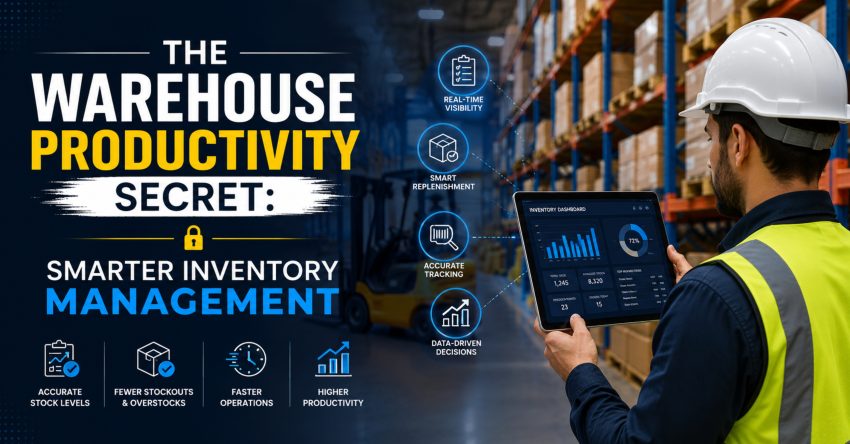
Warehouses are an indispensable component of present day’s businesses. They have a pivotal in customer satisfaction in industries like retail, manufacturing, e-commerce, or logistics where delivery schedules determine profitability. As businesses deal with increased volumes of products and quicker orders, the need for maintaining organized warehouse operations cannot be overlooked. This is where proper inventory management plays a crucial role in enhancing the productivity of warehouses.
Warehouses can easily get into chaos when systems are not in place. This can lead to lost productivity and increased operational costs. due to a variety of factors including misplaced products, incorrect stock levels, late deliveries and poor workflow efficiency. In today’s business world, companies need to take wise and organized decisions to manage their inventories effectively and run their warehouses smoothly.
Improving Inventory Accuracy
Out-of-stock items can pose significant problems in the warehouse. Inaccurate stock counts can result in overstocking, understocking and shipment errors, which are all negative business influences. Human resource errors are more likely to occur with manual inventory tracking methods, particularly in large warehouses that process thousands of products per day.
Modern inventory management systems provide inventory information with real-time updates and automatic tracking, thereby making it easier for businesses to keep detailed inventory records. Furthermore, bringing in barcode scanning, RFID technology, and digital inventory control cuts down the chances for mistakes and boosts overall operational control. Availability of accurate inventory data helps warehouse managers in making informed decisions about their purchases, storage, and order fulfillment.
Enhancing Order Fulfillment Speed
Today, people have become accustomed to ever faster delivery times. Now companies are being pushed to deliver and fulfil orders as fast as possible, and with accuracy. Slow warehouse operations can have a negative impact on customer satisfaction and brand reputation.
When inventory management is done well, it makes it easy to keep the order-fulfillment process streamlined, and products are always monitored and always available. Warehouse staff can work faster with high accuracy and efficiency when handling orders, picking and packing, and shipping items. Quick turnaround time does not simply boost productivity but also contributes to an improved customer experience.
Better Space Utilization in Warehouses
Warehouse is a highly valued asset to any business. Inadequate storage planning can lead to the stacking of too many items on the shelves, unused space, and slow movement in the warehouse. Organizing may also be a challenge for businesses when dealing with seasonal inventory fluctuations.
Good inventory management can help to utilize the warehouse space better. Product tracking and inventory management are a major step towards utilizing more space effectively by planning where products are stored and moved. Frequently used products can be stationed in areas that are easy to access, and slow-moving stock can be stored separately. Utilizing space effectively will also enhance workflow efficiency and promote safe warehouse operations.
Supporting Data-Driven Decision Making
Data is now providing a high value-added tool for increasing the efficiencies of modern businesses. The advanced inventory management system offers comprehensive information regarding the flow of inventory, demand trends, product movement, and storage utilization. These insights are useful in helping warehouse management know where there are inefficiencies in the operation and help them to supply workers with more effective productivity strategies.
Data-driven inventory management can also aid businesses to predict customer demands more accurately, limit excess inventory, and have more controlled supply chain functions. Access to more warehouse performance data enables companies to react faster to market conditions.
Conclusion
With the business landscape being ever-expanding coupled with high customer demand, warehouse productivity has come out to be a vital component of business success. Businesses can aim to achieve better inventory accuracy, faster order fulfillment, optimal use of storage space, and fewer delays with effective inventory management. With smarter inventory management practices, businesses can establish a competent, effective, and economical warehouse that will hasten and keep on contributing to long-term business development.
FAQs
Q1: How does inventory management improve warehouse productivity?
Effective inventory management organizes warehouse operations by ensuring accurate stock levels, faster order fulfillment, better space utilization, and data-driven decision-making — reducing delays, errors, and unnecessary costs.
Q2: Why is inventory management important in warehouses?
Inventory management helps warehouses maintain accurate stock levels, avoid overstock or stock shortages, and ensure smooth daily operations, leading to better customer satisfaction and improved efficiency.
Q3: What are the biggest challenges in warehouse inventory management?
Common challenges include inaccurate stock records, misplaced inventory, delayed shipments, overstocking, understocking, and poor warehouse organization, all of which affect productivity and profitability.
Q4: How do modern inventory management systems improve stock accuracy?
They provide real-time updates and automatic tracking, reducing human errors common in manual methods. Technologies like barcode scanning and RFID further improve accuracy, giving warehouse managers reliable data for purchasing, storage, and order fulfillment decisions.
Q5: What tools help improve warehouse efficiency?
Inventory management software, warehouse management systems (WMS), barcode scanners, RFID technology, and automated tracking tools help improve warehouse efficiency by increasing speed, accuracy, and operational control.
Also Read: How Inventory Management Prevents Overstocking and Stockouts