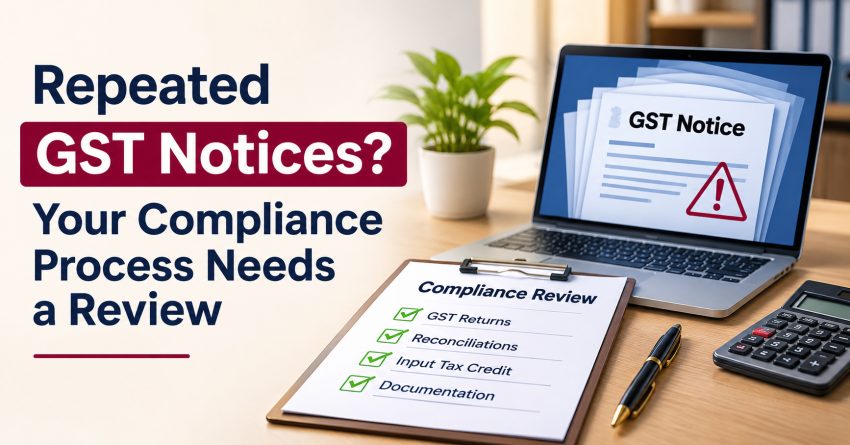
Receiving an occasional GST notice does not necessarily mean a business has failed to comply with tax requirements. However, repeated notices concerning tax payments, input tax credit (ITC), or GST returns may indicate gaps in the compliance process. If left unresolved, these issues can lead to additional scrutiny, costs, and penalties where applicable. A systematic review of GST records and internal processes can help businesses identify recurring discrepancies, address their root causes, and strengthen compliance with the support of professional GST audit services.
Why Are Companies Receiving Repeated GST Notices?
There are various reasons for the issuance of GST notice. To solve the problems and avoid new ones is important to find out what caused the problem.
Common reasons include:
- Differences in reported figures: Any differences between the GST returns, books of accounts and supplier-reported invoices could raise eyebrows.
- Incorrect claims/ ineligibility of input tax credit: Discrepancies between ITC claims, supporting documents, and applicable eligibility conditions may lead to queries from tax authorities.
- Delayed filing or multiple filing mistakes may cause compliance issues.
- Short payment or excess payment of tax – using an incorrect classification or rate of GST could cause this to occur.
- Incomplete documentation: Without an invoice, supporting records or with a lack of transaction detail, it may be difficult to substantiate reported amounts.
Some differences can be administrative; others can signal more serious issues with the accounting systems or employee duties/review processes.
How Can a GST Compliance Review Help Address Recurring Notices?
A systematic review of GST records can provide a clear picture of the reasons for which notices are being issued. The professional GST audit service can help with this audit by reviewing the records and determining discrepancies, along with suggested improvements.
Monitoring Financial Records and returns
An analysis of the GST return data with books of accounts, sales registers, purchase records and documents related to the transaction may help to spot discrepancies. This review can reveal recurring data-entry errors, reconciliation gaps, and incorrect tax calculations.
Examining Input Tax Credit Claims
It is important to verify and match input tax credit with the applicable conditions of eligibility and supporting documentation. By auditing credit claims, businesses can uncover unsupported claims, missed reversals and other problems that may need to be rectified.
Verifying Tax Payment and Filing Procedures
A compliance review can assess whether tax liabilities have been correctly worked out, and paid on time. It can also gauge if returns are filed on a consistent basis and if proper checks are filled out prior to filing.
Evaluating Internal Controls
Responsibilities may be unclear or review procedures may be inadequate, resulting in repeated errors. Implementing approval workflows, having good documentation and having someone own the reconciliation process can minimise the risk of a repeat occurrence.
What Are the Actions to Take After Receiving a GST Notice?
After receiving a GST notice, businesses should identify the notice type, the relevant tax period, the legal provisions cited, and the applicable response deadline. The reply should address the specific issues raised and include relevant supporting evidence. Since response requirements vary by notice type, businesses should review the notice carefully before taking action.
The following steps are typically:
- Ensuring consistency of the figures or transactions with regard to the issues presented by the tax authority.
- Compilation of all necessary documentation in terms of invoices, reports, payment records, and supporting documents.
- Deciding whether the issue at hand is merely an error, a difference in reporting, or an actual tax liability.
- The preparation of the response letter that needs to have evidence to back it and needs to be submitted within the given time frame.
- Reviewing the compliance process so that the future inconsistencies can be avoided.
The nature of the response will depend on the kind of notice received and GST rules in place. Professional assistance will be required in case of major tax liabilities, penalties, or interpretations issues.
Establishing a More Reliable GST Compliance Process
To improve compliance, companies can conduct regular reconciliation, keep an eye on filing deadlines, organize files and review changes in relevant GST requirements. Internal periodic checks can also help to detect issues in advance of them becoming regular notices.
Conclusion
Repeated GST notices may indicate underlying issues with reconciliations, ITC claims, tax payments, or internal review procedures. Identifying the root cause can help businesses correct discrepancies, improve documentation, and reduce the risk of recurring compliance issues. Professional GST compliance review services can help businesses assess their records, strengthen internal controls, and establish more reliable processes.
Receiving repeated GST notices?
Contact CAC to discuss your GST compliance concerns and identify the areas that may need review. Early attention to recurring discrepancies can help your business respond more effectively and strengthen its compliance process.
Contact CAC to discuss your requirements.
FAQs
Q: Why does my business keep receiving repeated GST notices despite filing returns regularly?
Repeated GST notices may result from return mismatches, incorrect ITC claims, tax payment discrepancies, or incomplete documentation.
Q: What should a company do immediately after receiving a GST notice in India?
Identify the notice type, check the response deadline, reconcile relevant records, gather supporting documents, and submit an evidence-based reply.
Q: What documents are needed to respond to a GST notice related to return mismatches?
Relevant documents include GST returns, sales and purchase registers, tax invoices, payment records, reconciliation statements, and supporting evidence.