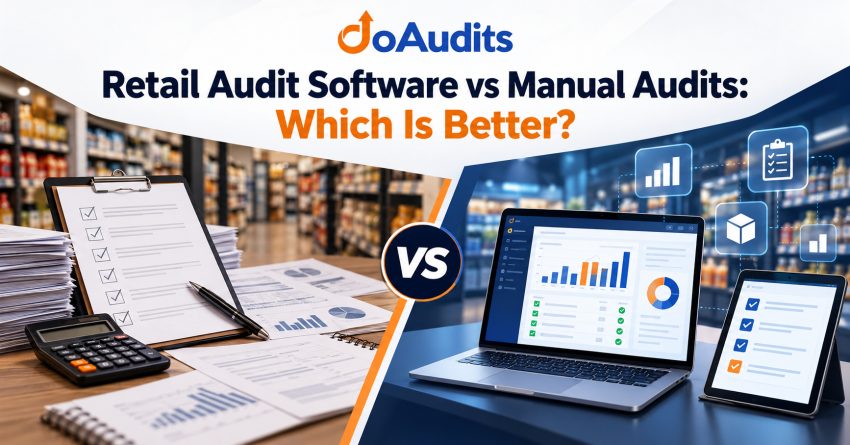
Retail audits help businesses ensure that stores, outlets and field operations follow established standards. Regular audits provide valuable insights into product displays, pricing, stock levels and compliance. However, the method used to conduct audits can significantly affect the speed, accuracy and usability of the information collected. As retail networks expand, businesses are increasingly considering retail audit software as an alternative to manual audit processes.
How Manual Retail Audits Work
Printed checklists, spreadsheets, photographs and manually prepared reports are traditionally used for audits. Auditors go to the store, observe and come back and combine the information for review by management.
Manual audits may be suitable for smaller operations with fewer stores and less frequent audit requirements. But there could be issues like:
- Late submission of the audit reports
- Errors in manual data entry
- Difficulty tracking corrective actions
- Inconsistent audit formats
- Limited visibility across locations
- Time-consuming report preparation
The difficulties involved in these can make it more difficult for management to recognize problems on a recurring basis.
What Retail Audit Software Offers
Retail audit software can digitize many aspects of the audit process, including developing checklists, gathering data, and producing reports. Mobile devices allow auditors to capture observations in the store, add photos and submit their observations without the need to fill out other documents.
Tools such as DoAudits can help businesses digitise inspections, standardise checklists, document findings and track corrective actions. These capabilities can help teams monitor audit results across multiple locations, depending on the software’s features and implementation.
A digital solution can also help to better harmonize the way different auditors conduct inspections. Use of the same checklist, scoring system and reporting form allows for ease of comparisons across locations.
Compare the Two Approaches
| Area | Manual Audits | Digital Audits |
| Data collection | Paper forms or spreadsheets | Mobile or digital forms |
| Reporting | Often requires manual consolidation | Reports can be generated faster |
| Data accuracy | Greater scope for manual errors | Automated fields can reduce errors |
| Photo evidence | Stored separately in some cases | Can be attached directly to findings |
| Corrective actions | Often tracked manually | Can be monitored through digital workflows |
| Visibility | Information may be available after consolidation | Results can be accessed more quickly |
| Standardization | Depends on auditor consistency | Common checklists can be applied across locations |
These comparisons are appropriately qualified: software can improve efficiency, but the actual benefits depend on its features and implementation.
Improve Corrective Action Tracking.
An audit is valuable only when identified issues are addressed. When corrective actions are tracked manually, businesses may find it difficult to monitor responsibilities, deadlines and unresolved findings.
Retail audit software can help assign responsibilities, set deadlines and monitor outstanding actions. This allows management to focus on recurring issues and follow up on corrective measures more efficiently.
Consider Scale and Audit Frequency
The solution will vary based on the scale and scope of the retail business. Manual audits can be easily managed for a business that has a small number of outlets and has low audit frequency. But if an organisation has hundreds or thousands of stores, then a more structured system may be required.
Businesses should consider the following factors when choosing an audit approach:
- Number of retail locations
- Frequency of audits
- Number of auditors involved
- Complexity of audit checklists
- Volume of data collected
- Need for timely reporting
Select Based on Operational Requirements
Manual audits may remain suitable for smaller businesses or limited audit programmes. As retail operations expand, digital tools can improve consistency, speed up reporting and provide better visibility across locations.
Retail audit software can also reduce administrative work and help businesses organise audit findings and corrective actions. The right approach should enable management to identify problems, take timely action and improve retail performance consistently.
As retail networks expand, maintaining consistent standards across every outlet becomes increasingly complex. CAC’s retail audit services can help businesses strengthen compliance monitoring, identify operational gaps, improve corrective action tracking, and establish more consistent audit practices across locations.
FAQs
Q: Why are businesses switching from manual retail audits to digital audits?
Businesses are adopting digital audits to reduce reporting delays, minimise manual errors, standardise inspections, and improve visibility across multiple retail locations.
Q: How does CAC help businesses improve their retail audit processes?
CAC supports businesses by identifying operational gaps, strengthening compliance monitoring, improving corrective action tracking, and establishing consistent audit practices.
Q: What are the common challenges of manual retail audits?
Common challenges include data entry errors, delayed reporting, inconsistent audit formats, limited visibility, and difficulties tracking corrective actions.
Q: How can DoAudits help improve retail audit processes?
DoAudits can help businesses digitise retail inspections, standardise checklists, document findings and track corrective actions. Using digital audit workflows can help improve consistency and visibility across multiple retail locations, depending on the features used.