Introduction
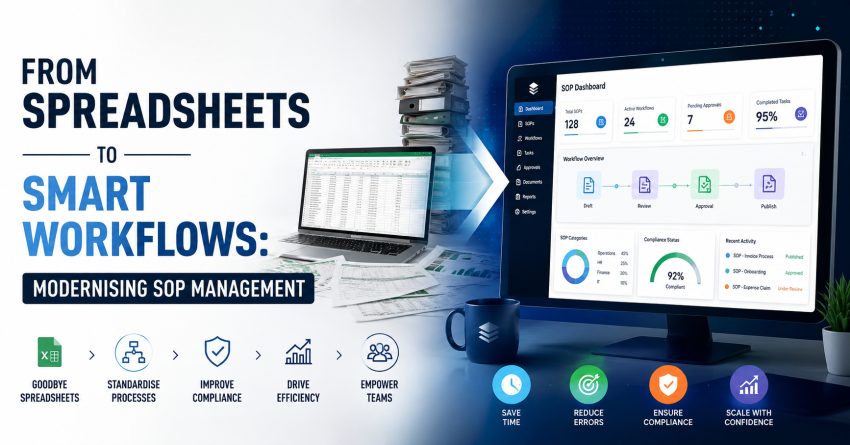
In numerous companies, the traditional method of maintaining the Standard Operating Procedures has been through the use of spreadsheets. Even though this practice seems effective, spreadsheet management becomes complicated when the organization grows. Confusion and risks are created when different versions exist and there is no collaboration among the people involved in the process. Modern companies now use technologies that convert ordinary documents into smart, automated processes.
Why Traditional Spreadsheet-Based Systems Fall Short
Version Control Challenges
One of the key issues associated with spreadsheets is ensuring that there is just one source of truth. People could be using an old version, which could lead to confusion. It may become hard to know what the current process is.
Limited Collaboration
Spreadsheets do not support collaboration. People who work in different departments or from various locations could experience delays while sharing information.
The Shift Towards Smart Workflow Solutions
Improvement Through Automation
The modern workflow software automates routine actions like approvals, alerts, and document reviews, reducing human involvement and ensuring that all processes comply with certain criteria.
More Efficient Process Management
Automated workflows cut down unnecessary delays, providing the tasks to appropriate individuals at the right time. Staff members save their time for other meaningful activities.
Features of SOPs in Modern Times
Centralized Document Storage
Having a centralized place where all the latest versions of procedures are stored enables all employees to have access to the latest version without having multiple copies of the same.
Controlled Access and Permissions
With the help of role-based permissions, organizations can decide who should be able to create, edit, review or approve a particular document.
Seamless Integration
Modern-day platforms have integration with various enterprise applications like project management, communication, and document management tools.
Business Benefits of Digital Transformation
Increased Compliance
Audit trails, history of approvals, and documentation ensure compliance with regulations through automated processes. All changes are documented, making the auditing process easy.
Enhanced Employee Experience
Interaction through workflows and roles makes it easier for employees to understand their roles. Newcomers will be able to learn faster, while experienced employees will enjoy improved processes. This ensures that SOP management is not only a breeze but also collaborative.
Preparing for the Future
Scalability
Organizations become more complex as they grow. Intelligent workflows grow with organizations as they can handle many users, departments, and operations without bringing up any management issues.
Process Improvements
Digital solutions give important data to help find places where processes can be optimized. Constant evaluations and workflow improvements make processes efficient, relevant, and in line with organizational goals.
Conclusion
The move from spreadsheets to intelligent workflows represents a significant step toward operational excellence. By replacing manual documentation with automated, collaborative systems, organizations can improve productivity, strengthen compliance, and enhance decision-making. Investing in modern digital SOP management solutions not only simplifies daily operations but also prepares businesses for long-term growth in an increasingly digital workplace.
Ready to transform your SOPs into intelligent, automated workflows? Partner with CAC SOP Management Services to streamline processes, strengthen compliance, and boost operational efficiency with customized, technology-driven SOP solutions.
Frequently Asked Questions
Q: How does digital SOP management reduce operational errors?
Yes. When employees can access a single, current version of an SOP, there is less risk of following outdated instructions, missing approvals, or using inconsistent processes.
Q: Why are audit trails important in SOP management?
Audit trails show what changed in an SOP, who made the change, who approved it, and when it was published. This improves transparency and provides useful evidence during internal reviews, audits, or compliance checks.
Q: Should every business process have an SOP?
Not every minor task needs a detailed SOP. However, processes involving financial approvals, customer service, quality checks, safety, compliance, data handling, or repeated operational activities should usually be documented.
Q: How can businesses measure whether SOPs are effective?
Businesses can track indicators such as process errors, turnaround time, compliance exceptions, employee acknowledgements, audit observations, customer complaints, and the number of outdated procedures awaiting review.
Q: Can CAC help create SOPs for a new business function?
Yes. CAC can support the design of clear, scalable SOPs for functions such as finance, HR, procurement, operations, customer service, compliance, and technology-enabled workflows.
Also Read:Effective SOP Management: Crucial for Business Growth