Introduction
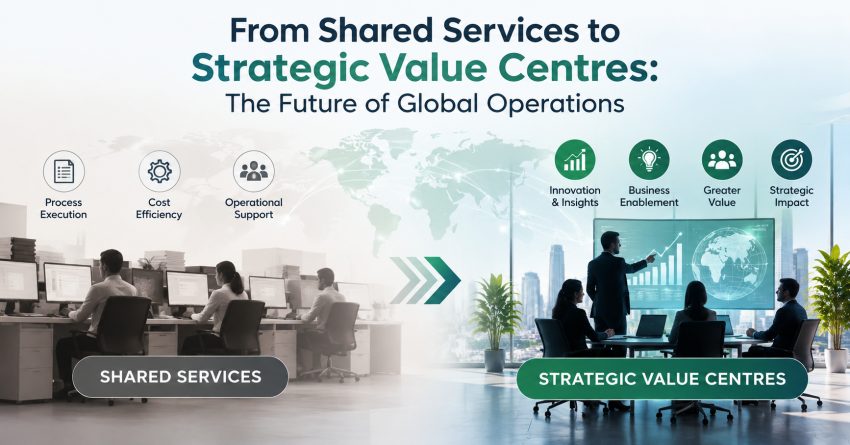
With companies venturing into international business environments, operational efficiency has gained more significance than before. Firms have gone past the stage where they were happy having centralized groups just performing operational tasks for them. Rather, what has evolved is that they are converting their operational centers into value centers contributing to innovation and growth. The development has brought about new opportunities for Global Shared Services.
Understanding the Shift in Global Operations
Beyond Traditional Shared Services
Historically, shared services centers were dedicated to the standardization of various operations including finance, human resource management, purchasing, and customer service. The goal of these centers was cost savings through process standardization.
Change in Strategy
Contemporary businesses expect much more from shared services centers. They should provide business intelligence, customer experience, and support digital transformation. Instead of being mere facilitators of operations, these centres are becoming strategic partners for organizations.
Why Strategic Value Centres Are Gaining Importance
Facilitating Business Innovation
With time, more organizations are depending on centralized resources that help detect areas that need improvement or where technology can be improved to enhance competitiveness of their businesses.
Enabling Quick Decisions
Through real-time data analysis, leadership teams of organizations can make quick and well-informed decisions. The value centers offer meaningful business insights and not just transaction processing.
The Changing Dynamics of Global Shared Services
Enabling Enterprise-Wide Collaboration
The future of Global Shared Services depends on dismantling the silo mentality. The centers not only work together with several business functions but also develop combined solutions to increase efficiency.
Building Cross-Functional Expertise
Individuals who function in the shared services environment have been trained in various skills such as analytics, technical abilities, and communication skills.
Technology as the Driving Force of Change
Intelligent Automation
Automation reduces repetitive manual tasks so that workers can engage in more productive ones. Robotic process automation, machine learning, and artificial intelligence-driven workflows enhance efficiency and consistency.
Cloud Computing
Thanks to cloud computing, companies are able to work collaboratively from different geographic locations. They have secure access to data and performance monitoring irrespective of geographic location.
Data-Driven Performance Management
Companies are using smart dashboards and predictive analytics for performance management. This allows them to track trends and make plans for resource optimization as well as improving customer satisfaction.
Global Operations that are Future Ready
Investing in Talent Development
It is impossible to add value through technology alone. Companies need to constantly upgrade their employees in areas like digital technologies, business analytics, problem-solving skills, and leadership. A competent team is key for the sustenance of transformation.
Cultivating a Culture of Innovation
Promoting innovation helps the team to adjust to changing requirements and achieve tangible results.
Conclusion
The future of global operations is evolving from efficient service delivery to business enablement. Companies that manage to transition from having efficient operational centers to value centers develop greater collaboration, better innovation, and increased business resilience. The continued advancements of digital technologies will make the future of Global Shared Services more significant when it comes to business strategy and achieving competitive advantage.
Elevate your global business performance with our Global Shared Services offerings from CAC, which have been developed to deliver greater efficiency, promote innovation, and create sustainable strategic value.
Frequently Asked Questions
Q: What is a strategic value centre?
A strategic value centre is a shared services model that contributes beyond routine back-office work. It uses technology, analytics, process expertise, and business insights to help leaders make better decisions, improve performance, manage risks, and support long-term growth.
Q: How does automation help shared services?
Automation can reduce the time spent on repetitive tasks such as invoice processing, payroll entries, report generation, employee onboarding, data validation, and customer-query routing. It can improve speed, reduce manual errors, and allow employees to focus on more strategic and value-driven activities.
Q: Which functions can be included in shared services?
Common functions include finance and accounting, HR, payroll, procurement, IT support, legal administration, customer service, data management, compliance support, and reporting. The functions selected depend on the company’s structure, priorities, and operating model.
Q: What are the key benefits of Global Shared Services?
Key benefits include improved process consistency, lower duplication of effort, stronger reporting, better compliance support, improved resource utilisation, scalable operations, faster service delivery, and greater visibility into business performance.
Q: Does CAC support Global Shared Services transformation?
Yes. CAC can support businesses in assessing existing operations, reviewing processes, identifying efficiency gaps, developing governance frameworks, and creating practical roadmaps for Global Shared Services transformation.
Also Read: End-to-End Optimization with Global Shared Services Models