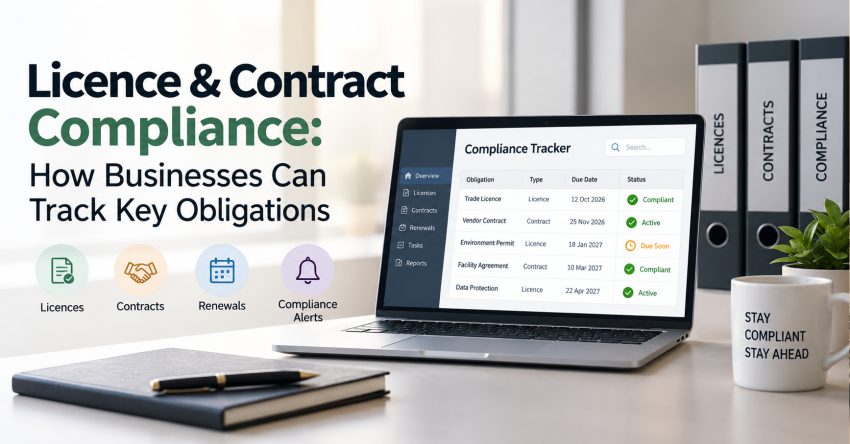
“Businesses must manage a range of licences, contracts, permits, certifications, and regulatory requirements. Failure to meet a renewal date, to comply with a contractual requirement or to meet a compliance condition may result in penalties, disruption to operations, and reputational damage. It’s not easy to manage these obligations by hand as organisations expand. That’s why effective licence compliance management is important for establishing clear responsibilities, timelines, and processes.
Why Licence and Contract Compliance Are Important
All businesses have responsibilities that go beyond business as usual. A software licence may specify usage limits, an operating licence may specify periodic renewal requirements, and a supplier contract may specify reporting or payment conditions.
If these requirements are not monitored, they can have serious consequences. Losing your licence could disrupt your business operations and having a missed contractual deadline could lead to financial losses or conflicts. Good licence compliance management will provide organisations with increased visibility of these requirements and help minimize the risk that important requirements are missed.
Develop a Centralised Compliance Register
The first step is to compile compliance information. A business can have a consolidated register of all the necessary licences and contracts, rather than have to keep track of all these different types of documents in separate spreadsheets, emails, folders and paper documents.
Some information may be important, such as:
- Name of licence or contract
- Authority to issue or contracting party
- Start and expiry dates
- Renewal requirements
- Key contractual obligations
- Responsible department/employee
- Supporting document
A centralised system gives management teams better visibility of their compliance status at any point in time. It also serves as a base for better compliance management of licence.
Set up an Owner for each obligation
Having a deadline to track is only useful if someone is going to take action on it. Businesses need to establish clear ownership of each licence, contract or regulatory requirement.
For instance, the legal department might manage contractual terms, finance department might deal with payment-related obligations and operations might work on business licence. Assigning responsibility to someone avoids the typical issue of someone thinking someone else is tracking a specific requirement.
Set Up Alerts to Stay Ahead of Deadlines
Memorizing or manually checking calendars can generate compliance risk. Automated reminders can alert responsible employees well in advance of a licence expiry date or contractual milestone.
Businesses can set up multiple alerts, such as 90, 60 and 30 days before a renewal date. This allows teams sufficient time to collect documents, get approvals, negotiate terms, or submit documents as required.
This type of monitoring is a major benefit of current licence compliance management, allowing companies to address obligations early, before they become serious issues.
Track changes and keep documentation up to date
Compliance cannot be achieved after a licence is renewed or a contract is signed. Conditions, terms and regulations may vary or contracts may be subject to change.
Organisations should continuously assess and keep up to date records of their obligations. A record of the renewals, approvals, amendments, correspondence and compliance actions also provides a useful audit trail.
Integrate Compliance into Day-to-Day Business
Last minute efforts are not the key to effective compliance. Centralization of information, assigning responsibility, reminders and reviewing obligations regularly are key features that can make compliance part of the normal business process.
Ultimately, systematic compliance management gives businesses greater control over their obligations, improves accountability, supports audits, and reduces uncertainty. As the number of licences and contracts grows, a structured approach can help organisations manage these requirements more effectively.
Turn complex licence and contract obligations into a clear, manageable compliance process.
Stay organised, avoid costly gaps and move forward confidently with CAC.
Frequently Asked Questions
Q: Why is licence and contract compliance important for businesses?
Licence and contract compliance helps businesses meet renewal deadlines, contractual commitments and regulatory conditions. Missing important obligations may lead to penalties, operational disruption, financial losses, disputes or reputational damage.
Q: What information should be included in a compliance register?
A compliance register can include the licence or contract name, issue authority or contracting party, start and expiry dates, renewal requirements, contractual obligations, responsible person or department, supporting documents and important deadlines.
Q: How can a business avoid missing licence renewal deadlines?
Businesses can record renewal dates centrally and establish automated reminders before each deadline. The article suggests alerts at intervals such as 90, 60 and 30 days before renewal to provide sufficient preparation time.
Q: Why is manual compliance tracking difficult for growing businesses?
As an organisation grows, the number of licences, contracts and regulatory requirements can increase. Managing these obligations across separate spreadsheets, emails, folders and documents can make deadlines and responsibilities harder to monitor.
Also Read: How Legal Contract Drafting Services Simplify Partnership Agreements