Introduction
The manufacturing sector is currently experiencing a fast change due to the introduction of automation and new technologies, as well as the shift in customer demands. The conventional approach to the processes which used to ensure efficiency in the manufacturing processes is not enough in the present competitive environment. Manufacturers are now trying to reconsider the entire process of their operations in order to increase efficiency. Business process reengineering can be helpful here.
Understanding Business Process Reengineering
What Is BPR?
BPR refers to the process of re-designing business processes so as to make drastic improvements in terms of performance, efficiency, quality, and customer satisfaction. While continuous improvement strategies aim at improving processes gradually, BPR calls for complete change of existing procedures.
Importance of BPR in Manufacturing Processes
Manufacturing processes consist of many related processes such as procurement, production planning, inventory management, quality management, and logistics among others. Any inefficiency in any of the processes may affect the entire process.
Emerging Industry Trends in Manufacturing BPR
Digital Transformation Driving Process Redesign
Smart Factories and Interconnected Processes
The implementation of technologies within the context of Industry 4.0 has changed manufacturing processes greatly. Smart sensors, smart machines, and real-time monitoring give manufacturers the ability to get useful information for decision making. Modern manufacturing plants are changing their production processes based on new capabilities provided by digital technologies.
Workflow Automation and More
Intelligent Workflow Automation
Automation is not limited to manufacturing operations any more. Manufacturers use automation for procurement approvals, inventory management, production planning, and maintenance planning.
Data-Driven Decision Making
Analytics in Real Time for Improved Performance
Contemporary manufacturing plants produce massive volumes of data on their operations. Through analytics, companies can discover bottlenecks, anticipate failures in machines, and improve production schedules. This is possible through process redesign based on data.
Customer-Centric Manufacturing
Flexible Production Models
Meeting Dynamic Market Demands
Today’s customers expect personalized products, shorter delivery times, and higher quality standards. Manufacturers are redesigning production systems to support flexible manufacturing, enabling quick adjustments without disrupting operations. This approach helps businesses respond efficiently to changing customer requirements.
Sustainability Turning into a Business Objective
Greener Manufacturing Procedures
Waste Reduction Through Improved Procedures
Being eco-friendly is becoming a key objective for all business organizations. Manufacturers have started reorganizing their businesses with an aim of reducing energy use and wastage of materials. Green manufacturing procedures help companies in saving money and enhance their reputation.
Transformation of Workforce in Modern Manufacturing
Collaboration between Human and Technology
Upskilling for Digital Operations
With advancements in technology becoming key in manufacturing, employees are playing a more important role than ever before. Organizational efforts in terms of upskilling focus on equipping the workforce with digital skills, automation skills, and data analysis skills.
Manufacturing Excellence in the Future
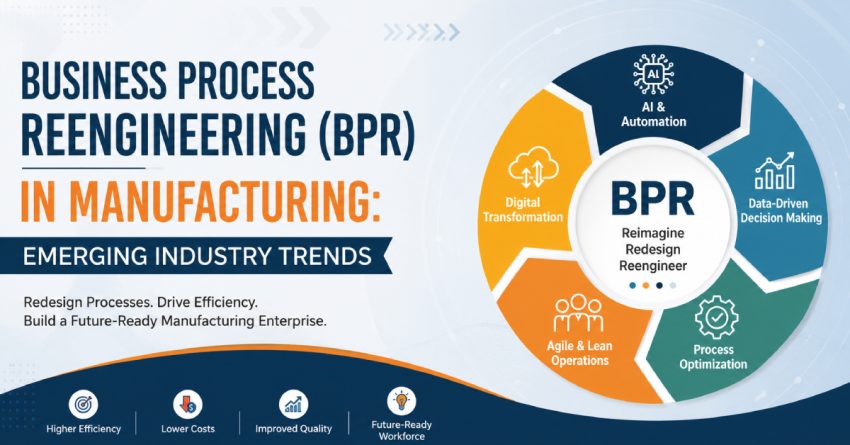
The future of manufacturing will go to those firms that embrace innovation and change according to industry trends. Business process reengineering helps manufacturers become agile, technology-based, and customer-focused operations. With such measures as digital transformation, automation, sustainability, and big data approaches, manufacturers will boost their efficiency in order to stay competitive in the ever-changing global marketplace.
Conclusion
The manufacturing industry is currently facing a paradigm shift whereby flexibility, intelligence, and efficiency are key elements for success. Those businesses that depend only on conventional ways of working put themselves at risk of losing out to competitors that adopt process transformation. Business process reengineering allows manufacturers to plan strategically and remain innovative enough to develop future-proof business processes to meet the demands of the market and consumers.
Frequently Asked Questions
Q: What is business process reengineering in manufacturing?
Business process reengineering in manufacturing involves fundamentally redesigning workflows such as procurement, production, inventory, quality control and logistics to achieve significant improvements in cost, speed, quality and operational efficiency.
Q: When should a manufacturing company consider BPR?
A manufacturer may consider BPR when it experiences frequent delays, rising costs, excessive waste, inventory discrepancies, quality problems, low productivity or difficulty responding to changing customer requirements.
Q: How does automation support manufacturing BPR?
Automation can reduce repetitive manual work, improve workflow consistency, accelerate approvals and provide real-time operational information. It should be introduced after the underlying process has been properly evaluated and redesigned.
Q: How can CAC help manufacturers with business process reengineering?
CAC can help manufacturers assess existing workflows, identify operational gaps, redesign processes and develop an implementation roadmap aligned with their performance objectives.
Q: When should a manufacturer approach CAC for process transformation?
A manufacturer may approach CAC when facing rising costs, operational delays, inventory problems, inconsistent controls, expansion-related challenges or a need to modernise existing processes.
Also Read: How Business Process Reengineering Drives Organizational Transformation