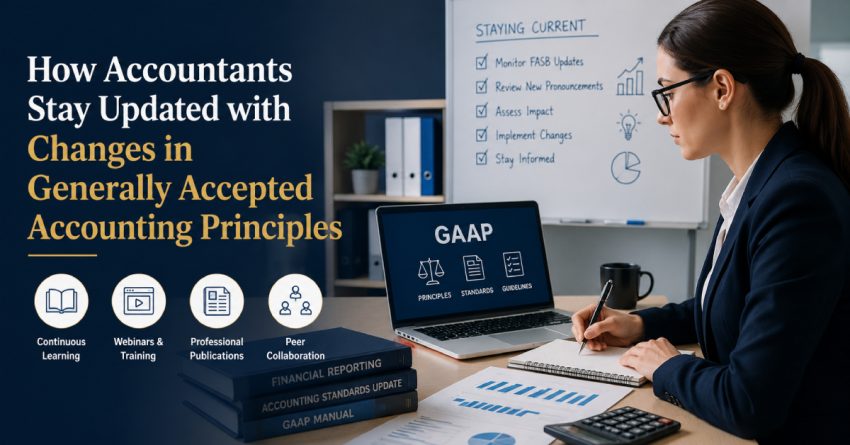
There have been various changes in the accounting principles because of business developments, technology advancements, and regulatory changes. This means that accountants should be aware of these changes so as to be able to meet the necessary compliance requirements, maintain proper financial reporting, and make proper business decisions. This is because changes in the accounting regulations affect the methods of reporting the financial performance of organizations.
These changes may include alterations in various aspects such as revenue recognition and leasing among others. Therefore, there have been many changes which require accountants to come up with strategies to cope with the changes.
The Importance of Staying Updated
To enhance transparency, accuracy, and consistency in the preparation of financial reports, accounting standards have been developed. As soon as any change or amendment is implemented, companies must comply with the new requirements.
There can be many adverse consequences if companies do not keep themselves ahead of changes, such as errors in their financial reporting. In addition, this practice can put firms at risk legally, during audits, financially, and in terms of stakeholders’ trust. This is why learning is an important aspect of being an accountant.
Accountants have moved far from only recording information from the books of accounts. Their responsibilities include managing risks, strategizing about business development, and making financial decisions, among others. Therefore, being updated will help them perform these tasks effectively.
Participating in Professional Training Programs
Professional and continuing education training programs are among the most efficient means through which accountants get to be aware of changes in their profession. Such training programs provide information on accounting changes and other developments within the profession.
The various accounting professional bodies and associations often issue educational publications to enlighten members on accounting changes and standards. The continuous education that comes about is useful in improving accountants’ skills in the field.
Continuous professional education has been made necessary by the advent of digital finance systems.
Following Industry Publications and Regulatory Updates
Accountants should keep up with changes coming from accounting standards board, financial regulation bodies, and professional organizations. Publications and research articles can be very useful when learning about changes in accounting practices and rules.
The Internet makes such monitoring much more convenient than before as well. In many companies, it is recommended that workers subscribe to relevant accounting resources so that they could be aware of the changes in their field.
Changes in GAAP usually occur in a gradual fashion, providing enough time for preparation. Accountants who carefully watch industry publications can successfully adapt to changes.
Leveraging Technology and Digital Learning
Through technology, accounting professionals have been able to learn and access information in a new way. Online learning platforms, virtual conferences, and artificial intelligence (AI) tools now offer immediate access to the latest accounting resources from anywhere around the globe.
Software companies providing accounting software also keep updating their systems to fit the changes in regulations. Through advanced financial instruments, accountants will be able to know how regulations change the process of reporting and control.
Professional digital platforms also enable the exchange of knowledge between professionals and discussions on complex issues.
Building a Culture of Continuous Learning
Accounting professionals who realize that learning should be a constant process recognize that firms which encourage continuous improvement will develop more effective finance teams that can effectively adjust to any regulatory changes that take place.
This can be achieved by companies through supporting employees’ training sessions, certification processes, and access to resources provided in the industry. Mentoring and learning from peers will also allow professionals to stay current while gaining practical experience.
Given today’s ever-changing financial landscape, it has become essential for every professional to keep ahead of developments in the field of accounting.
FAQs
Q: What are Generally Accepted Accounting Principles (GAAP)?
GAAP refers to a set of accounting standards, principles, and procedures used to ensure consistency, accuracy, and transparency in financial reporting.
Q: Why is it important for accountants to stay updated with GAAP changes?
Keeping up with GAAP changes helps accountants maintain compliance, improve financial reporting accuracy, reduce risks, and support better business decision-making.
Q: How often do accounting standards change?
Accounting standards are updated periodically to address changes in business practices, technology, regulations, and financial reporting requirements.
Q: How do accountants learn about changes in GAAP?
Accountants stay informed through professional training programs, industry publications, regulatory updates, webinars, seminars, and continuing professional education courses.
Q: What is Continuing Professional Education (CPE) in accounting?
CPE refers to ongoing training and educational programs that help accounting professionals maintain their knowledge, skills, and awareness of regulatory changes.
Q: How does technology help accountants stay current with GAAP changes?
Technology provides access to online courses, virtual conferences, accounting software updates, AI-powered research tools, and digital knowledge-sharing platforms.
Q: Why is continuous learning important for accounting professionals?
Continuous learning enables accountants to adapt to changing regulations, improve professional skills, enhance decision-making capabilities, and remain competitive in the industry.
Also Read: Generally Accepted Accounting Principles (GAAP): Essentials for Beginners