Product returns are an unavoidable part of retail operations. Customers may return goods due to incorrect orders, damaged packaging, defective products or changes in purchasing decisions. However, managing returns requires the same level of control and accuracy as managing sales and regular inventory movements.
When returned goods are not properly recorded and tracked, businesses may face stock discrepancies, avoidable losses and inaccurate inventory records. A structured retail returns audit can help businesses monitor goods from the point of return at the store to their receipt and processing at the distribution center.
Why is tracking retail returns important?
When goods are returned, they do not necessarily become available stock. Depending on their condition, returned goods may require inspection, repackaging, repair, replacement, return to the supplier or disposal before their final inventory status is determined. If these processes are not documented correctly, it will be difficult to know where your stock really is.
If you have multiple stores, your stock may go through multiple people, multiple storage areas and transport.
By completing a structured audit, you can ensure everyone has accountability and your stock movement matches your records.
Common Issues in Retail Returns
There are a number of issues that could occur when returning stock.
- Incorrect Documentation: The correct documentation may not be completed so no invoice, return authorization or product information may be present.
- Incorrect Stock Recording: Goods may not be recorded as having been returned.
- Losses or Damage During Transit: Goods may become lost, damaged or swapped whilst in transit.
- Delayed Reconciliation:There may be discrepancies between the store and distribution centre.
- Incorrect Categorisation: Goods that can be sold, faulty goods and obsolete goods may be categorised within the same section of stock.
By highlighting these issues, you can improve the accuracy of your stock.
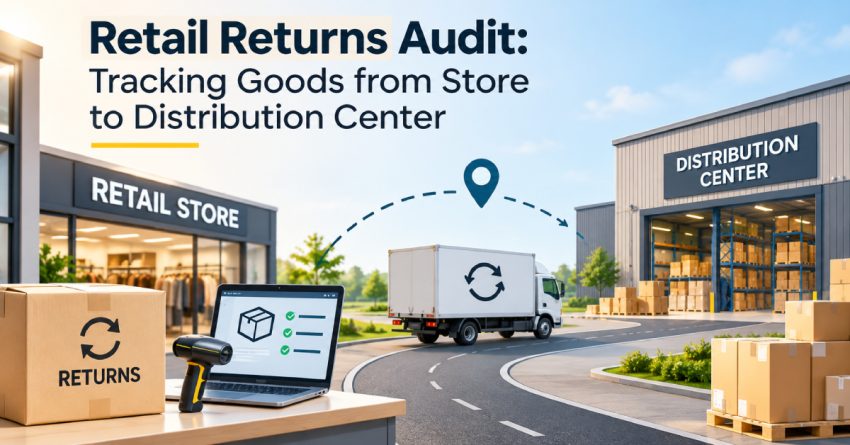
How does a retail audit track stock from store to distribution center?
A returns audit will look at the whole process.
- Store Verification
The first step will be to ensure that the returned items have been documented correctly. You may want to check that there is a return authorisation, original purchase information, product code and reason for return.
- Identifiable Stock
All items should be identifiable with a reference. Using a barcode scanner, product labelling and return tracking number will help you identify the stock movement.
- Transport Verification
You should also check that the correct amount of goods have been dispatched. This can be done by looking at transport documents, shipment information and handovers.
- Distribution Centre Reconciliation
Once your goods have arrived at the warehouse you should check that you have the correct amount and they are in the right condition. If there are any discrepancies, such as less, more or damaged stock then this should be noted and investigated.
- Categorisation
Once your stock has been inspected, you should categorise your returned stock. This will depend on what condition they are in and what needs to happen next. For example, Restocking, repair, returning to supplier or disposal. This should be reflected in your stock management system.
How to improve your returns process
By creating processes, recording your stock movement digitally and completing regular stock checks you can improve your returns process. Assigning roles to your staff in the store, transport and warehouse will also help.
By regularly reconciling your returned items from your store, dispatch and distribution center you can see any consistent discrepancies.
Make Returns Management part of your retail process
Return management is an important part of inventory control and financial accuracy. Without proper tracking, small discrepancies between stores, transport teams and distribution center can lead to avoidable stock losses.
A structured retail returns audit can help businesses improve stock visibility, strengthen accountability and ensure that returned goods are properly recorded and reconciled throughout the process.
Looking to Improve Your Retail Returns Management?
CAC can help businesses review inventory records, verify stock movements and identify discrepancies across retail stores and distribution centers.
Contact CAC to discuss your retail audit requirements.
FAQs
Q: What is a retail returns audit?
A retail returns audit checks whether returned goods are authorised, recorded, transported, received and correctly classified from the store to the distribution center.
Q: How can retail chains in Delhi improve returns reconciliation?
Use unique return references, document each handover and reconcile store dispatches with distribution center receipts. Assign ownership to investigate differences.
Q: How can I arrange a retail returns audit across multiple locations?
Contact CAC with your store and warehouse locations, returns volumes and current reconciliation issues to discuss audit coverage and reporting requirements.