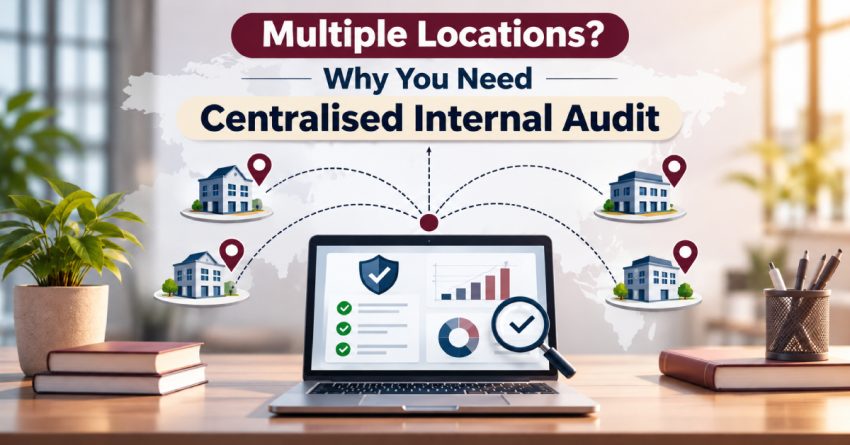
Auditing multiple branches, offices, warehouses, or manufacturing plants can be challenging for businesses. Different locations may follow inconsistent procedures, maintain different documentation, or interpret company policies differently. These inconsistencies can increase the risk of errors, financial irregularities, and compliance issues. A centralised internal audit approach helps businesses standardise audit practices, improve oversight, and identify potential problems before they escalate. With appropriate internal audit services, organisations can strengthen accountability and ensure that controls are applied consistently across locations.
Challenges of Auditing Various Locations
Auditing businesses across multiple locations can be challenging because of differences in management practices, employee capabilities, and the way company policies are applied.
Some of the main challenges include:
- Variances in documentation and reporting practices between branches.
- Limited ability to monitor transactions and activities in various locations.
- Different understanding of approval and financial control procedures.
- Lack of prompt detection of repetitive mistakes and potential fraud.
- Difficulty comparing performance and compliance across locations.
Ways in Which Centralized Internal Audit Increases Oversight
Centralized internal audit involves bringing together audit planning, methodology, reporting and monitoring standards. Rather than allowing each location to follow different audit practices, this approach establishes consistent methods for assessing risks and reviewing internal controls.
The benefits of centralized internal audit are:
Standardized Audit Methodologies
Standardized audit procedures make sure that the branches are audited using uniform standards. There is no need for developing checklists and documenting procedures at every branch.
Identifying Risks More Easily
An audit group that is centralized is capable of looking at the information provided by different locations and finding out what the problems are. Shortages of inventory at different warehouse locations, for example, might mean there is a problem in the process of reconciling the inventory. Firms will be able to determine which locations pose higher risk and focus their efforts on auditing them.
Better Compliance and Accountability
Central oversight enables organizations to ensure compliance with company policies, contracts, and all relevant regulatory requirements. It makes accountability clear because responsibilities can be assigned concerning the handling of the findings.
These professional internal auditing services could help with that through conducting risk assessments, reviewing controls, and conducting follow-ups, based on the needs of the particular organization.
Higher Efficiency
Consistent auditing enables the sharing of knowledge among team members as well as avoiding duplication of efforts in work. The same report format and methodology will allow higher-level executives to review the findings without the need to reconcile various report formats.
Recurring issues may provide opportunities for process improvements, better controls, and cost savings.
Creating a Centralised Audit Structure
In order to create a centralised audit structure, businesses should identify key risks for their locations and understand the controls in place in them. At this stage, businesses can establish a common audit plan, define reporting responsibilities, and set audit frequencies based on the risks at each location.
The help of technology would be useful in creating central dashboards, audit reports, and automatic monitoring of the corrective actions made, but the local circumstances should not be overlooked. For example, manufacturing may require different operational checks from a sales office.
It is therefore important for follow-ups to be done regularly to ensure that such weaknesses are not reported over and over again without being corrected.
Conclusion
A centralised internal audit approach helps multi-location businesses apply consistent controls, improve risk visibility, and strengthen accountability. By combining standardised audit procedures with risk-based reviews tailored to individual locations, organisations can identify weaknesses and make better-informed decisions. The right internal audit services can help businesses implement this approach and monitor corrective actions effectively.
FAQs
Q: What is centralised internal audit, and why is it important for businesses?
Centralised internal audit uses consistent audit procedures, reporting standards, and risk assessments across multiple business locations to improve oversight, compliance, and accountability.
Q: How can companies manage internal audits across multiple branches?
Companies can manage multi-branch audits through standardised checklists, centralised reporting, risk-based audit plans, and regular monitoring of corrective actions.
Q: How can CAC help organisations strengthen their internal audit processes?
CAC’s internal audit services can support organisations in assessing risks, reviewing internal controls, improving audit consistency, and monitoring corrective actions across business locations.