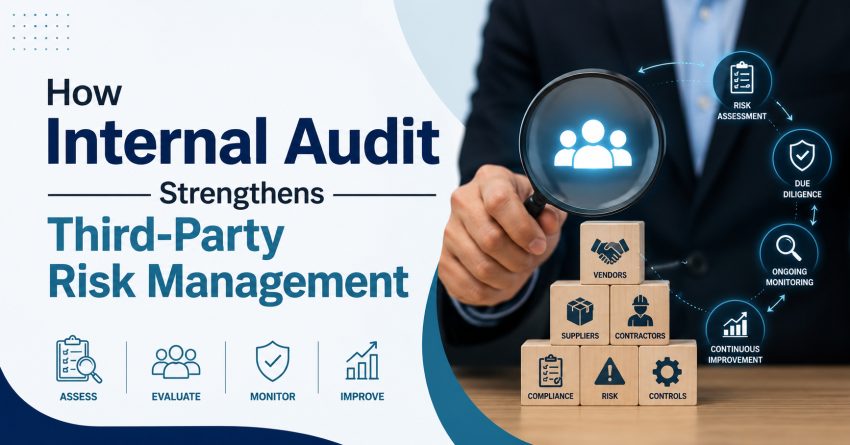
Given the ever-connected nature of business, more organizations are depending on third parties like vendors, suppliers, contractors, consultants and service providers to help them function. Although these relationships can lead to greater efficiency and lower costs, they can also present a variety of risks that could affect business operations, compliance, and reputation. Effectively managing these risks is key to long-term success, and Internal Audit has an important role in helping organizations identify, assess and mitigate third party risks.
Understanding Third-Party Risks
Third-party risks are typically those caused by third parties who do not fulfill their contractual duties, adhere to regulations, security measures or provide the level of service expected. They can manifest in various ways, from disruption and downtime, financial losses, data breaches, regulatory compliance violations, and damage to reputation.
The more business partners an organization has, the more difficult it will be to monitor and manage the risks. That’s where a robust internal audit function can offer valuable oversight and assurance.
Assessing Vendor Selection and Due Diligence Processes
One of the critical activities Internal Audit can undertake to mitigate third-party risk is to audit vendor selection and due diligence processes. Organizations should evaluate the financial stability, operational capacity, compliance track record, risk profile and other factors of a third party prior to entering a business relationship with them.
Internal auditors test to see if the proper due diligence processes are in place and followed. They can pinpoint gaps in vendor evaluation processes, enabling organizations to choose and engage third-party vendors effectively.
Assessing Contract Management Practices
A contract is the basis of third-party relationships by setting out roles, the level of performance, rules for compliance and who takes on what risk. If contracts are not managed properly, they can pose potential risks for organizations.
Contract management processes are reviewed as part of internal audit to ensure that contracts are well documented, monitored and enforced. Auditors look at whether activities are conducted in accordance with the key contractual requirements and if there are any systems and procedures in place to deal with non-performance and non-compliance.
Monitoring Compliance and Regulatory Requirements
There are a number of industries that are governed by strict regulations that also apply to third party relations. Organizations can be liable for vendors’ conduct, especially in regard to data security, financial disclosure and other industry-specific regulations.
An Internal Audit is an assistance to ensure third parties adhere to relevant legislation, regulations and company policies. By conducting regular audits and compliance checks, auditors can detect any potential gaps and make recommendations for corrective measures before they become a regulatory problem.
Improving Cybersecurity and Data Protection
With the growing trend of businesses relying on outside partners for sensitive information, cyber security concerns have been on the rise. A third party has a security fault, which can cause vulnerabilities in the entire supply chain.
The internal auditors assess third party cybersecurity measures, data protection policies, access controls, etc. These assessments provide organizations with insight into how well vendors provide protection for confidential information and reduce risk of cyber incidents.
Enhancing Ongoing Risk Monitoring
Third party risk management is an ongoing process. The risks may change over time, as a result of changing business conditions, regulations, and technology or vendor performance.
Internal audit is used to assist with continuous monitoring through the ongoing review of key performance indicators, risk assessments and control measures. This proactive strategy allows companies to detect potential risks early and act in time.
Conclusion
While there are many benefits of third-party relationships, there are also risks that must be managed. Internal Audit is a critical component in vendor due diligence, compliance with contracts, tracking regulatory obligations, fortifying cyber security measures, and regular risk management. In an increasingly complex business landscape, Internal Audit can help organizations develop more comprehensive third-party risk management frameworks, mitigate risks for their business operations, and retain stakeholder trust, by delivering independent assessments and actionable recommendations.
Frequently Asked Questions
Also Read: Internal Audit vs External Audit: Key Differences Explained