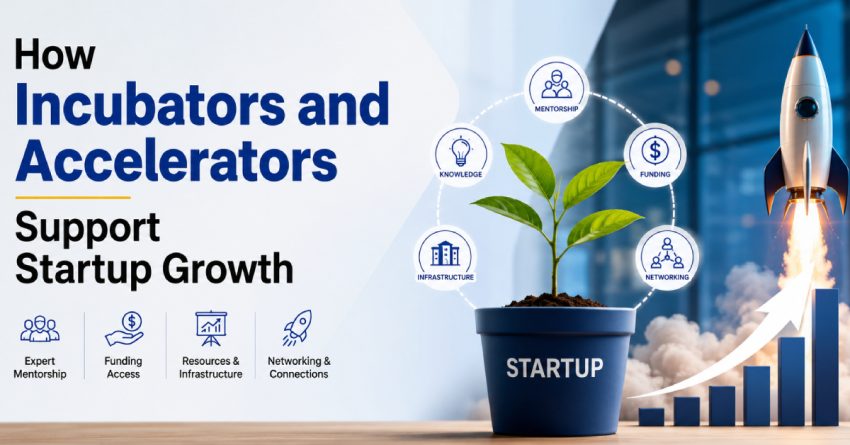
Starting a new business is packed with challenges; bet it limited funding to lack of market experience, the founders are often seen caught in a spot of bother. Hence, the significance of support becomes imperative, especially in the early stages. By and large, the most crucial of the assistances are the incubators and accelerators as they have the onus in assisting the startups for their structured and sustainable growth.
In this direction, organizations like Startup India have also been at the forefront to bolster every effort within the startup ecosystem by encouraging such programs across the country. Incubators and accelerators now have a role as the strong pillars of support for startups with their primary task being offering guidance, funding access, and business development opportunities.
Understanding Incubators and Accelerators
Incubators are tools or a set of programs that have been laid down to help the early-stage startups that are still shaping their ideas. They offer a developmental environment wherein founders can fine tune their business models. On the other hand, accelerators are steadfast in their approach with rapidly growing programs aimed at startups that already have a basic structure and are ready to scale.
Both play a major role in delivering support for startups, but they differ in approach. Incubators focus on long-term development, while accelerators work on rapid growth within a short time frame.
Access to Mentorship and Guidance
Among the various types of aid that startups receive from incubators and accelerators, mentorship is perhaps the most crucial. Startups get professional advice from people who already have a lot of experience within the industry.
They help them make the right choices in terms of decision-making, thus avoiding pitfalls and making decisions based on practical experience. This is particularly relevant for startups run by inexperienced individuals.
Funding Opportunities and Investor Access
Fundraising is another issue that most startups face. Incubators and accelerators provide them with links to potential investors.
Moreover, many incubators even offer seed funding. Financial assistance from such sources serves as a significant boost for startups, enabling them to concentrate solely on developing their project or idea.
Resource and Infrastructure
Setting up an office and maintaining its proper functioning involves expenses. Incubators usually provide shared office space, equipment, and other infrastructural facilities without charging anything.
This provides practical support for startups during their initial stages of operation
Industry Contacts for Strong Networking
The development of a company is largely factored with how strong the contacts are. Incubators and accelerators provide entrepreneurs with an opportunity to network with people from the same industry, potential partners, and other entrepreneurs.
That kind of experience may serve as great assistance for startup companies that need more contacts to collaborate or establish themselves in the market.
Increased Speed and Marketability
Specifically, accelerators try to help companies grow faster than they would normally do. Accelerators provide startups with intensive programs that help them improve strategies for fast implementation in the market.
The speed-based strategy may serve as valuable assistance for startup businesses that strive to enter the market quickly and compete with other players.
Establishing Credibility and Trust
Participation in incubators or accelerators may serve as additional proof that the company is reputable and trustworthy. People who work with startups will probably consider the company credible because of that kind of affiliation.
In that way, credibility becomes indirect support for startup businesses that need more recognition in the industry.
Conclusion
Today, both incubators and accelerators are considered essential components for supporting startups. Programs within incubators and accelerators help entrepreneurs to develop and implement their projects in a more efficient manner.
Also Read: How Business Startup Support Builds a Strong Online Presence