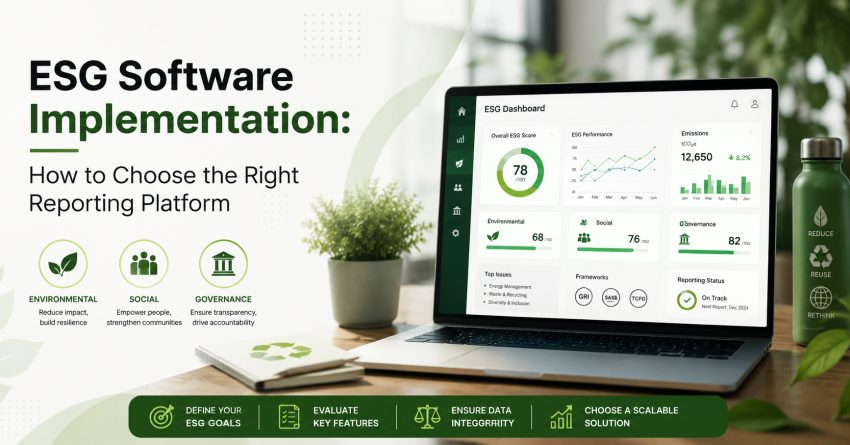
ESG reporting has emerged as an important area of concern for various businesses irrespective of sectors. Stakeholders, including investors, regulators, and consumers, are now expecting more transparency from businesses in terms of their sustainability initiatives. Managing ESG information manually can sometimes prove to be challenging for businesses and is one of the reasons behind the implementation of ESG reporting software. Selecting a good reporting platform is therefore vital for any organization.
Importance of ESG Reporting Platforms
An ESG reporting platform collects sustainability information from several company departments and helps track company performance, create reports, and comply with regulations. With the right platform, an organization can make decisions without having to worry about mistakes in reporting.
Benefits of Using ESG Reporting Software
Increased Accuracy of Data
Automatic collection of data reduces chances of human mistakes and provides consistency of ESG data.
Regulatory Compliance
Current ESG reporting platforms are created in such a way that companies comply with different reporting frameworks.
What to Consider When Selecting an ESG Platform
However, choosing the right solution is not just about comparing various software features. The company must decide whether the platform is in line with its future sustainability strategy.
Scalability and flexibility
Prepare for Growth
In order to address growing ESG requirements, the platform must be able to deal with increasing data sources, new business units, and other reporting frameworks without making drastic modifications to the system itself.
Flexible reporting
Each Company Has Its Own Reporting Requirements. A good platform must allow customization of reporting templates, dashboards, and performance indicators.
Reporting System Integration
Compatibility With Other Software
The best platform must allow seamless integration with ERP, Human Resources, financial and operational software. It will prevent double entry of the same data. Most companies prefer ESG software implementation that allows smooth integration into the existing system.
ESG Features That Enhance ESG Reporting
A good ESG system is not just about simple ESG reporting.
Advanced Analytics
Real-Time Dashboards
Through real-time dashboards, ESG performance becomes visible to management teams for better decision-making.
Predictive Insights
With the help of advanced analytics, organizations can track trends, risks, and progress towards their sustainability goals.
Security and Data Governance
Protect Sensitive Information
As ESG reporting involves sensitive information about operations and finances, it is vital to have secure data governance features.
Questions to Ask Before Implementation
There are questions that a company must consider prior to implementing any reporting solution.
Assess Business Needs
Determine Reporting Objectives
Pinpoint which environmental, social, and governance metrics and standards apply to your company before acquiring any software.
Assess Vendor Assistance
Find vendors who offer training, technical help, and maintenance to guarantee successful implementation. It may prove helpful to work with professionals familiar with ESG software implementation.
Conclusion
The selection of an effective ESG reporting platform is an important choice to make considering how it impacts the accuracy of ESG reporting, regulatory compliance, and sustainability performance. The factors such as scalability, integration, analytics, security, and vendor support will help the organization implement the ESG solution that will meet present and future needs.
Boost your sustainability roadmap using CAC’s ESG software implementation services, which aim to ease reporting, ensure compliance, and increase the use of data-driven decisions.
Frequently Asked Questions
Q: What is ESG reporting software and why is it important?
An ESG reporting platform is a software solution that collects sustainability data from multiple organizational departments, tracks performance, generates reports, and helps ensure regulatory compliance. It is necessary because managing complex environmental, social, and governance information manually using spreadsheets leads to inaccuracies, inefficiencies, and reporting mistakes.
Q: What are the key benefits of implementing ESG reporting software?
- Increased Data Accuracy: Automated data collection eliminates human errors and ensures consistent ESG reporting metrics.
- Regulatory Compliance: Built-in templates align with various evolving reporting frameworks to keep companies compliant.
- Enhanced Decision-Making: Real-time dashboards and predictive insights give management visibility over sustainability risks and long-term goals.
Q: What key factors should a company consider when selecting an ESG platform?
- Scalability and Flexibility: The platform must handle expanding data sources, additional business units, and new reporting standards without needing major structural redesigns.
- Software Integration: Seamless integration with existing Enterprise Resource Planning (ERP), HR, financial, and operational systems prevents duplicate data entry.
- Customization: The platform should support custom dashboards, performance indicators (KPIs), and specialized reporting templates.
- Security and Data Governance: Robust security features protect sensitive operational and financial ESG data.
Q: How much does ESG reporting software cost?
The cost depends on factors such as the number of users, reporting requirements, data sources, integrations, company size, and implementation support. Businesses should evaluate the total implementation and ongoing costs against their reporting and compliance needs.
Q: How can CAC help with ESG software implementation?
CAC can help businesses assess their ESG reporting requirements, select suitable software, integrate relevant data sources, establish reporting processes, and support implementation to improve ESG reporting accuracy and compliance.
Also Read: AI, ESG, and Compliance: The Future of Corporate Governance