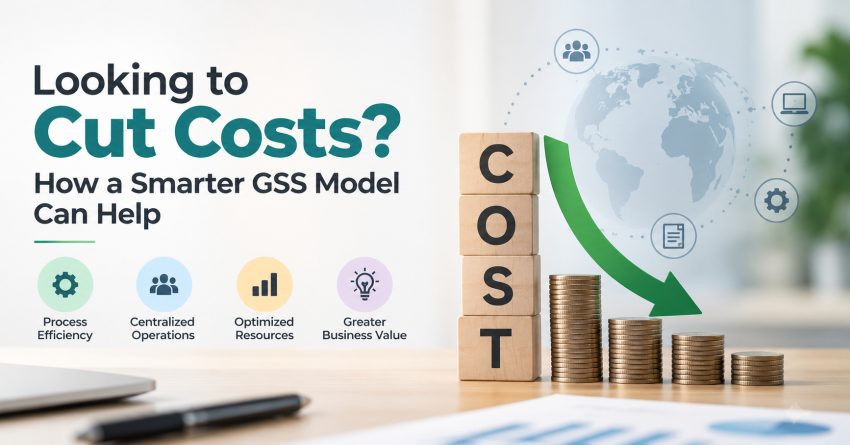
In the modern world of business competition, companies are always looking for ways to minimize their costs without lowering the quality of their services. Common approaches to achieving this include downsizing or restricting investments. However, these measures may not always be effective or sustainable. The new GSS model presents a better way to go about this problem.
Understanding the Value of Global Shared Services
By bringing together business operations that involve finance, human resources, procurement, customer services, and information technology, Global Shared Services provide a centralized way of running these services.
Why Businesses Are Moving Towards Shared Services
Having these services centralized helps prevent duplication, facilitates interaction among various departments within the company, and provides consistent services. As businesses expand around the world, they are able to provide their services in many places without incurring high costs.
How a Smarter GSS Model Reduces Costs
Just centralizing is not enough anymore. It’s time to use smarter approaches and apply technology, automation, and data analytics.
Process Standardization
Standardized processes eliminate discrepancies and increase effectiveness. Employees waste less time solving problems and have more time to do value-added things. Standardization makes it easier to comply with regulations and to file reports in different jurisdictions.
Automation of Routine Tasks
Modern automation solutions can perform routine activities like invoicing, payroll processing, reporting, and onboarding. Automation saves time, reduces mistakes, and gives specialists an opportunity to concentrate on strategic initiatives.
Optimal Resource Allocation
A smart GSS model helps organizations to allocate talented people where they add maximum value to the business. In the smart GSS model, companies can create specialized centers of excellence and avoid duplication of efforts.
Using Technology to Increase Efficiency
Technology is vital for turning shared services into business-enabling entities.
Advanced Analytics and Business Intelligence
Data-Driven Decisions
Analytics provides visibility into operational performance, helping businesses identify inefficiencies, improve processes, and make better decisions.
Cloud Platforms
These help with accessibility, collaboration across worldwide teams, and lower cost of infrastructure management. They ensure business continuity because employees can work safely from different places.
Beyond Cost Savings: Additional Business Benefits
Though cost savings remain the major aim, a better approach to shared services provides a range of other benefits.
Better Workforce Experience
Centralized service processes can result in improved response time and consistency, and thus will increase employee satisfaction within the organization.
Scalability
As the organization grows through expansions and acquisitions, the implementation of a standardized shared services process will become much easier.
Improved Governance and Compliance
Uniform Policies in All Branches
A centralized operational system allows organizations to establish consistent policies.
Conclusion
Efficiency and optimization of costs must go hand-in-hand and never undermine the company’s performance. An effective GSS model allows organizations to reduce operational costs while improving efficiency, scalability, governance, and service quality. With the use of such tools as automation, standardization, analytics, and cloud computing, businesses are able to make a transition from a support service into a growth enabler.
Cut down on costs and increase efficiency with CAC’s Global Shared Services offerings designed specifically to make your processes efficient and promote sustainable growth.
Frequently Asked Questions
Q: Why do companies move to a Global Shared Services model?
Companies adopt Global Shared Services to bring similar business activities under one structured operating model. It helps improve control, reduce process variation, and deliver consistent support across multiple teams, locations, or entities.
Q: What is the first step in setting up a GSS model?
The first step is usually to assess existing processes, costs, technology, teams, and service requirements. This helps identify which functions are suitable for centralisation and what changes may be required.
Q: How can companies measure GSS performance?
Performance can be measured through service turnaround time, accuracy, cost per transaction, compliance levels, stakeholder satisfaction, productivity, and resolution time for service requests.
Q: Can CAC help design a Global Shared Services model?
Yes. CAC can help businesses assess their current operating model, identify functions suitable for shared services, define process improvements, and create a structured implementation roadmap.
Q: Can GSS improve business continuity?
Yes. Centralised processes, documented workflows, shared systems, and cross-trained teams can help businesses continue important operations during disruptions or workforce changes.