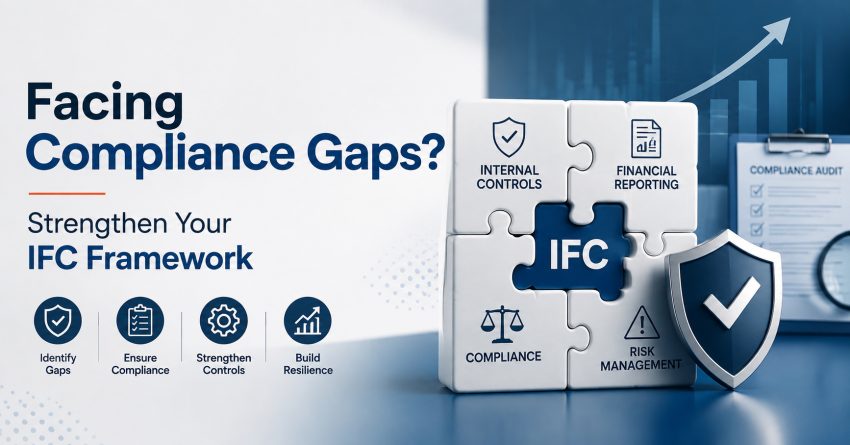
In this current age of regulation, companies are increasingly expected to be open, precise, and responsible when it comes to their financial reporting. The loopholes can stem from poorly organized processes, mistakes on account of manual entry, lack of proper oversight, or evolving regulatory requirements. Should these go unchecked, such loopholes could result in financial losses, regulatory fines, and damage to the company’s reputation. An internal financial control system is key to achieving that.
Understanding Compliance Gaps
A compliance gap is a situation where the current policies and practices of an organization cannot meet certain compliance requirements. Such gaps can be witnessed in financial reporting, procurement, inventory control, payroll process, or approval process.
A company that conducts reviews on its compliance framework is in a better position to fight fraud.
Importance of IFC Framework
An appropriate internal financial controls framework defines a series of procedures, duties, and oversight arrangements within the organization. This allows management to protect its assets, have accurate accounting, and comply with legal obligations.
An appropriate internal financial controls framework also promotes a culture of accountability.
Objectives of Internal Financial Control (IFC)
To Enhance Financial Precision
The application of controls minimizes the possibility of financial discrepancies, duplication, and wrong records, hence accurate financial statements of the firm.
To Strengthen the Ability to Mitigate Risks
A proper IFC structure assists in the early detection of financial, operational, and compliance risks before they turn into real problems for the organization.
To Improve Compliance with Regulations
Firms that have put in place a proper internal financial control system will be better placed to operate in line with the regulations.
Common Indicators of Weak Financial Controls
The first step towards having a better control environment starts with identifying warning signs.
Some Common Audit Findings
Frequent audit findings point to areas such as documentation or financial procedures that need immediate attention.
Lack of Segregation of Responsibilities
In cases where an individual person conducts more than one critical financial function, there is a high likelihood of fraud.
Manual Process & Lack of Consistency
The extensive use of spreadsheets and manual approvals creates inconsistency.
Steps to Enhance Your IFC Framework
Creating a good IFC framework is an ongoing process, not a one-time endeavor.
Conduct a Comprehensive Risk Assessment
Find High-Risk Areas
Analyze business operations like revenue recognition, procurement, cash management, and accounting to discover high-risk areas.
Analyze Existing Controls
Analyze existing policies and procedures to find areas for improvement.
Create Standardized Financial Processes
Develop standardized process flows and approval processes within departments. Standardized processes promote responsibility and decrease operational risks.
Use Technology
Technology can be used to automate approvals, track transactions, keep records of activities, and provide instant reports. Automation also helps decrease risks associated with human errors.
Test and Monitor Controls Periodically
Regular testing will ensure that controls work effectively even if the business processes change.
Creating a Compliance Culture
A strong IFC structure is not only about having the right documents in place. All employees should be aware of their duties, and should have regular training sessions on compliance issues. At the same time, there is a need for ethical practices and issue reporting by management.
Companies that integrate compliance into their everyday work establish a more robust governance culture.
Conclusion
Compliance has gone beyond simply meeting the requirements but has become a strategic asset as well. Through the development of effective financial controls within the company, it becomes possible to minimize risk, enhance financial accuracy, and gain stakeholder confidence. With continuous assessment of risks, process improvement, and the use of technology, an efficient IFC framework may be developed.
Improve your corporate governance with the help of CAC’s financial control experts. We will be able to help you identify risks and introduce appropriate controls that will contribute to sustainable business development.
Frequently Asked Questions
Q: What is a compliance gap in financial management?
A compliance gap occurs when an organization’s policies, procedures, or internal controls fail to meet applicable regulatory or operational requirements.
Q: How can businesses identify gaps in their IFC framework?
Businesses can identify IFC gaps through risk assessments, internal audits, control testing, process reviews, and analysis of recurring financial or compliance issues.
Q: How can CAC help strengthen an IFC framework?
CAC can help businesses assess existing controls, identify compliance gaps, strengthen financial processes, and implement practical IFC frameworks aligned with business and regulatory requirements.