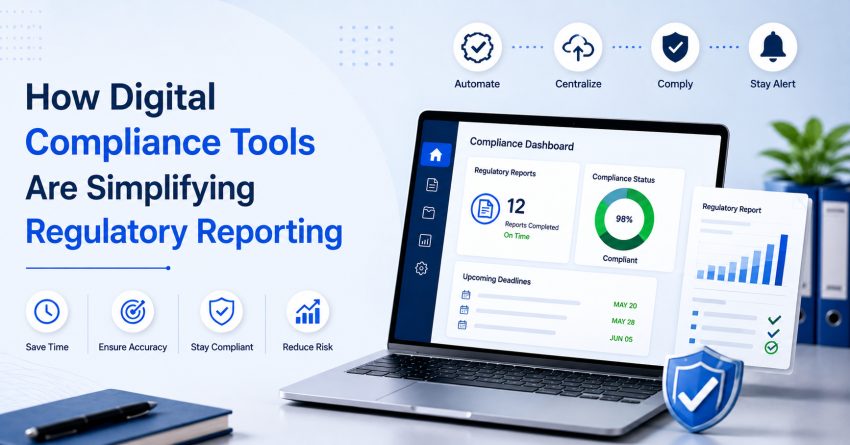
Regulatory reporting is becoming increasingly complex as businesses face evolving compliance requirements across industries. Manual reporting processes can lead to errors, delays, and compliance risks. Digital compliance tools simplify these challenges by automating reporting, improving accuracy, and helping businesses stay compliant with changing regulations.
The Challenges of Traditional Regulatory Reporting
It is common practice in the framework of traditional compliance reporting to gather data from different departments, review records manually, and prepare the reports in Excel. This procedure may be lengthy and inconsistent.
Alongside the increasing complexity of the compliance rules, companies should be prepared to keep up with constant updates in the legal system. Failing to meet deadlines, providing false information, or neglecting the compliance rules will bring about various sanctions, conflicts, and harm the reputation of the company.
Digital compliance services help solve these problems through standardizing the process of reporting.
Automation Saves Time from Manual Tasks
Among the key benefits of the use of compliance tools is the automation process. Rather than manually collecting and arranging the necessary data, automated compliance tools collect the data in real time from different departments within the organization.
These tools can create compliance reports, remind about the deadline for their submission, and identify missing data before the report is created. This helps reduce reporting errors, improves accuracy, and saves valuable time.
Businesses that utilize company compliance services can streamline processes that enable compliance officers to engage in strategic risk management.
The Centralization of Data Increases Precision
In digital compliance solutions, the documentation, policy information, approvals, and reports are stored in one centralized system. In such a way, all employees receive timely updates and are not confused with outdated files or duplicate reports.
Whenever there is the need to provide regulators with the required documentation, businesses will be able to do this instantly, having all the necessary data in one place. Accurate data will also improve the audit readiness and show commitment to compliance regulations.
Real-Time Monitoring Enables Better Decision-Making
Modern compliance software allows monitoring of the activities of businesses and notifies them about any compliance risk factors. Businesses will learn about their risks and avoid violating regulations during their annual audits.
With real-time dashboards, managers can obtain important information regarding compliance performance, compliance obligations, and reporting.
Easier Adaptation to Regulatory Changes
As mentioned above, regulatory frameworks change from time to time, and companies have to adapt their reporting processes and policies to comply with new requirements. Digital compliance tools may come with automatic regulatory updates, allowing firms to stay in line with existing legal requirements.
Thus, businesses can easily adapt without making any major adjustments to the whole compliance process. Companies that collaborate with compliance services for businesses will be able to increase their efficiency when responding to new regulations.
Conclusion
Digital compliance tools help businesses simplify regulatory reporting through automation, improved accuracy, and real-time compliance monitoring. As regulatory requirements continue to evolve, adopting digital compliance solutions enables organizations to reduce risks, improve efficiency, and maintain long-term compliance with confidence.
Frequently Asked Questions
Q: What are digital compliance tools?
Digital compliance tools are software solutions that help businesses automate compliance management, monitor regulatory requirements, maintain documentation, and generate accurate reports while reducing manual effort.
Q: Why is regulatory reporting important for businesses?
Regulatory reporting helps businesses comply with government laws and industry regulations. Timely and accurate reporting reduces legal risks, avoids penalties, and improves business transparency.
Q: What are the benefits of using automated compliance reporting?
Automated compliance reporting helps businesses:
- Reduce manual errors
- Save time
- Improve reporting accuracy
- Meet submission deadlines
- Strengthen audit readiness
- Adapt quickly to regulatory changes
Q: What features should businesses look for in compliance management software?
Key features include:
- Automated reporting
- Document management
- Workflow automation
- Audit trails
- Risk monitoring
- Regulatory updates
- Dashboard analytics
- Secure data storage
Q: How do company compliance services support regulatory reporting?
Company compliance services help businesses implement compliance frameworks, automate reporting processes, monitor regulatory obligations, manage documentation, and ensure ongoing compliance with applicable laws.
Q: How can CAC help with regulatory compliance?
CAC provides compliance consulting, regulatory reporting support, risk management, and governance solutions to help businesses meet changing regulatory requirements efficiently.
Also Read: How Company Compliance Services Protect Businesses from Risk