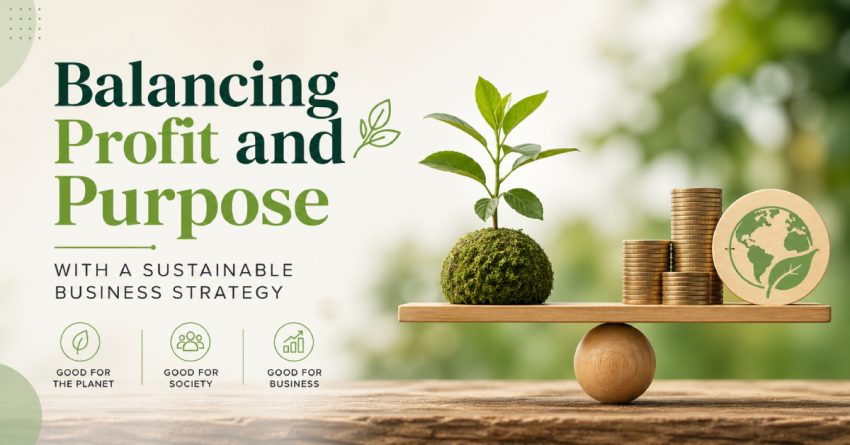
Businesses today are no longer judged only by how much profit they make. Customers, investors, and even employees are paying close attention to how companies operate and what impact they create. This shift has made it important for organizations to adopt a sustainable business strategy that balances financial growth with social and environmental responsibility.
A business that focuses only on profits may see short-term gains, but long-term success often depends on trust, transparency, and responsible practices.
Understanding Profit and Purpose
Profit is essential for any business to survive and grow. It supports expansion, innovation, and employment. On the other hand, purpose refers to the positive impact a company creates—whether it is reducing environmental harm, supporting communities, or maintaining ethical practices.
A well-planned sustainable business strategy ensures that both these aspects go hand in hand. Instead of choosing one over the other, businesses can align their goals to achieve both.
Building a Responsible Growth Model
Companies can integrate purpose into their operations without compromising profitability. For example, reducing waste, improving energy efficiency, and sourcing responsibly can lower costs in the long run. These steps form an important part of a sustainable business strategy.
When businesses operate efficiently and responsibly, they not only save resources but also build a stronger brand image. This, in turn, attracts customers who prefer conscious and responsible brands.
Meeting Customer Expectations
Today’s consumers are more aware than ever. They want to support businesses that care about the environment and society. A clear sustainable business strategy helps companies communicate their values and build trust with their audience.
Customers are more likely to stay loyal to brands that show commitment to ethical practices. This loyalty directly contributes to long-term profitability.
Attracting Investors and Talent
Investors are also looking at sustainability before making decisions. Companies with a strong sustainable business strategy are often seen as lower-risk and more future-ready. They are better prepared to handle regulatory changes and market shifts.
In addition, employees prefer working with organizations that have a clear purpose. A responsible business attracts skilled professionals who want to contribute to meaningful work, improving overall productivity and innovation.
Overcoming Challenges
Balancing profit and purpose are not always easy. Businesses may face challenges such as higher initial costs or changes in existing processes. However, these challenges can be managed with careful planning and long-term thinking.
A practical sustainable business strategy focuses on gradual improvements rather than sudden changes. This approach helps businesses stay stable while moving towards more responsible operations.
Long-Term Benefits of Balance
When businesses successfully balance profit and purpose, they create a strong foundation for the future. A sustainable business strategy helps in building resilience, improving reputation, and ensuring steady growth over time.
Companies that adopt this approach are better equipped to handle economic uncertainties and changing market demands.
Final Thoughts
Balancing profit and purpose are no longer an option, it is becoming a necessity. A thoughtful sustainable business strategy allows businesses to grow while contributing positively to society and the environment.
By aligning financial goals with responsible practices, companies can create lasting value not just for themselves, but for everyone connected to them.
Also Read: Sustainable growth feat small businesses