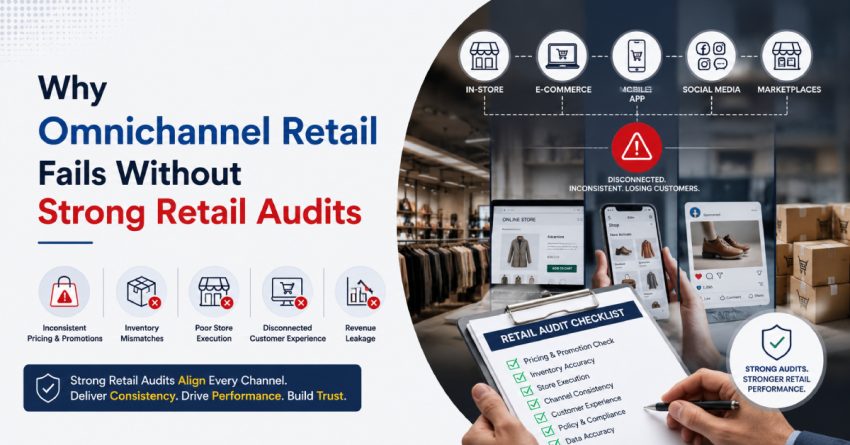
The retail industry has undergone a major transformation in recent decades. Customers no longer depend solely on physical stores for their shopping. Instead, they interact with brands through multiple channels, including websites, mobile apps, social media platforms, and brick-and-mortar stores. This shift has given rise to Omnichannel retail, where businesses strive to provide easy and consistent customer experience across all touchpoints. In such a complicated environment, Retail Audit has become more important than ever.
Understanding Omnichannel Retail
Omnichannel retail is a strategy that involves connecting all sales and communication channels to provide a seamless shopping journey. They can do everything from online browsing to checking on the availability of products using a mobile application and finalize the transaction in a physical location. They want one set of prices, promotion, product and service across all channels.
This degree of integration can be problematic. There is a possibility of losing some customers and sales if there is any difference between the channels. That’s where Retail Audit can come in handy to ensure smooth operations and consistency.
Making sure of consistent customer experiences
The main goal of retail audit is to uphold the standards of brands as consistency is one of the major aspects of Omnichannel Company. Customers always demand the same products in terms of price and quality whether they are stored or online.
Businesses can spot discrepancies by regularly conducting audits that can save customer experience. Retailers can track the execution of the store, the delivery of promotions, pricing accuracy, and the inventory, which allows them to ensure that shoppers have consistent and dependable experience in all retail channels.
Improving Inventory Visibility
At the point of inventory management, Omnichannel retail is one of the most difficult things to get right. Customers may expect immediate information on product availability. Inaccurate inventory data can lead to order cancellations, delays, or customers’ dissatisfaction.
A detailed Retail Audit can assist companies in keeping track of inventory with the aim of discovering discrepancies in stock, out-of-stock scenarios and inventory management issues. Retailers can meet customer demands more efficiently with enhanced visibility of inventory, as well as reduce any disruptions in their operations.
Supporting Better Decision-Making
Retail audits are an excellent tool for analyzing the performance of a retail store, how customers act, and how efficiently a business operates. Audit results can be used to determine trends, promotional effectiveness and company standards compliance. Data-driven decision making is key in an Omnichannel retail setting.
Strengthening Brand Reputation
Brand reputation depends on customers’ interaction with the brand being consistent. If there’s a discrepancy between the two channels, then there’s a risk of losing the trust of customers and affecting the brand’s reputation.
Retail audits are essential for retailers to meet high standards by making sure that stores follow company policy and customers’ expectations. This uniformity adds to the brand’s reliability and fosters customer loyalty, critical in a competitive retail landscape.
Conclusion
Consistency, accuracy, and operational excellence are major factors in an Omnichannel retail world that is always changing. Retail audit is an essential tool to achieve such goals. With the help of retail audit, companies can manage the complex Omnichannel retail sector. The audit helps in optimizing inventory management, enhances customer experience, decision making, and protects brand reputation.
Frequently Asked Questions
Also Read: Retail Audits: A Key to Consistent Store Performance