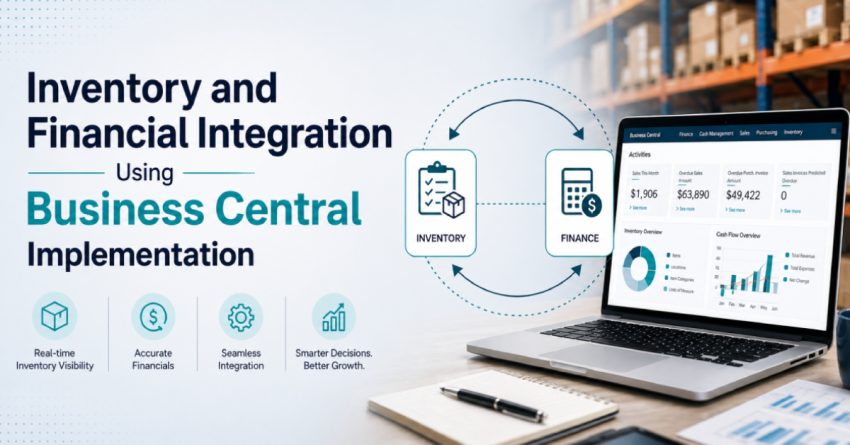
It is nearly impossible for management of both inventory and finances to be handled without confusion, delay and error in any business. In case stock data and financial records are not similar, it is hard to comprehend the actual business status. This is where business central implementation plays an important role by bringing inventory and financial data together into one system.
The Need for Inventory and Financial Integration
Inventory is managed using different tools in most businesses and accounting is done on different platforms. Such disconnect usually results in a mismatch of data, wrong stock valuation, and slow reporting of finances. Lack of integration can make businesses find it difficult to track costs, manage cash flow and make timely decisions.
In the business central implementation, business can link inventory and financial processes. This means that the financial records will automatically record every move of the stocks and minimize chances of errors.
Inventory Value Tracking in Real Time
Real time visibility is one of the largest benefits of business central implementation. Whenever goods get bought, sold, or moved, the system will automatically update the inventory and financial records in real time.
This will assist businesses have an accurate picture of the value of their inventory at a particular time. Financial statements require proper valuation of stocks, and the integrated system facilitates the process and makes it easy and sound.
Improved Cost Management
Inventory and finance are interlinked, and in this case, cost tracking is more effective. The central implementation of business can enable businesses to track costs of products such as procurement, storage and distribution costs.
This cost insight in detail enables the businesses to price their products appropriately and healthy profit margins. It is also useful in determining areas where the costs can be cut without negatively impacting operations.
Better Financial Reporting
Inventory information is critical to financial reporting. When stock figures are wrong, it has a direct effect on profit and loss statements and balance sheets. Business central implementation is used to provide a flow of data in inventory to financial reports without any manual handling.
This will lead to improved and prompt reporting, which is crucial in decision-making. These reports can guide the business owners and the finance teams to plan budgets and future strategies.
Simplified Purchase and Sales
Purchasing and sales are easier when the inventory and finance are combined. The business central implementation automates the recording of all transactions so that all purchase orders and sales invoices are recorded in inventory and accounts.
This saves handling of manual work, and the chances of duplication and omissions are minimized. It also shortens the overall workflow, which assists businesses to work more efficiently.
Improved Cash Flow Management
Inventory is closely related to cash flow. Excessive inventory commitment binds up capital, and insufficient inventory may result in lost sales. Through central implementation of business, a business has a clear picture of inventory and financial commitments.
This assists in making improved purchasing choices and a healthy balance of stock flow and cash flow. Businesses can budget their expenditure and investments.
Supporting Business Growth
The larger the business, the harder it is to deal with the inventory and finances. The manual systems or disjointed tools might not be capable of processing more data and transactions. Business central implementation is a scaled solution that expands with the business.
It assists in several sites, increased stock quantities and more multifaceted financial frameworks without the loss of accuracy or efficiency.
Conclusion
It is no longer a choice of business organizations that seek to be efficient and accurate to integrate inventory and financial processes. By implementing business central implementation, organizations will be assured that their stock information and other financial records are in sync all the time. This will not only minimize errors but also enhance better decision-making and business performance.
Implementing an integrated strategy will help businesses transition to more streamlined operations, improved financial management, and sustainable growth.
Also Read: D365 Business Central Implementation for Scalable and Efficient Growth