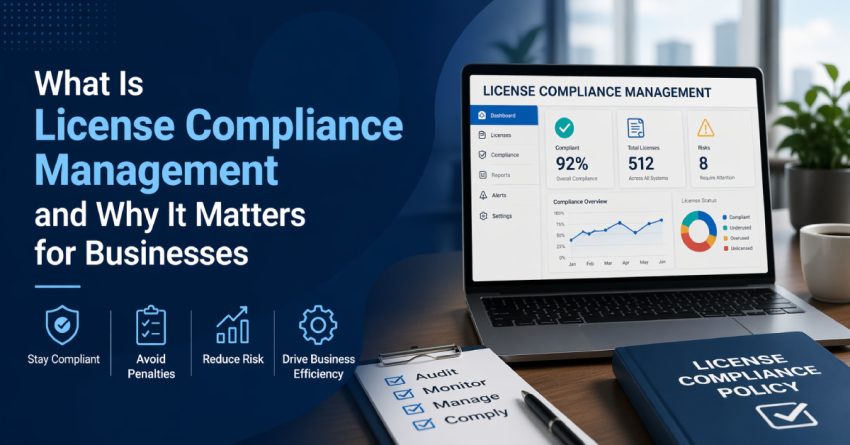
In today’s digital-driven business environment, organizations rely heavily on software, tools, and digital assets to operate efficiently. With this growing dependence comes the need to ensure that all software and licenses are used legally and responsibly. This is where license compliance management plays a crucial role.
Understanding License Compliance Management
License compliance management refers to the process of tracking, managing, and ensuring that a company’s use of software and digital licenses adheres to legal and contractual requirements. Every software product comes with specific licensing terms that define how it can be used, how many users are allowed, and under what conditions it can be deployed.
Businesses often purchase multiple licenses across departments, which can quickly become difficult to monitor. Without a structured system in place, companies risk overusing licenses, utilizing resources, or violating agreements unknowingly. Effective license compliance management helps maintain transparency and control over these assets.
Why License Compliance Management Matters
Another major factor that makes license compliance management significant is to evade the legal and financial risk. Failure to comply with software licensing agreements may attract heavy fines, audits and even prosecution. The software vendors conduct regular audits to make sure that their products are being utilized as per the terms. The failure to pass such audits may hurt both money and reputation.
Cost optimization is another advantage. Most organizations end up wasting money on the licenses that are not necessary or not utilizing the available ones. Through appropriate license compliance management, the companies will be able to spot unutilized or redundant licenses and reassign them to other areas. This results in increased budgeting and low cost of operation.
Enhancing Operational Efficiency
The license compliance management also enhances the general efficiency of operations besides compliance and cost saving. With a clear picture of the software assets of the businesses, they are able to make a sound decision regarding upgrades and renewals as well as subsequent investments. It also gets rid of confusion but also makes sure that employees do not suffer delays and disruptions when using the tools they require.
In addition, the centralized management systems simplify functions in terms of tracking and reporting of licenses and reminders on the renewal of licenses. This saves on labor and ensures that the occurrence of human error is limited and the whole system becomes more effective and efficient.
Supporting Business Growth and Scalability
The more business expansion, the more complicated the software demands are. The absence of a decent system may make it ineffective to regulate licenses in various teams and locations. The advantages of license compliance management are that it gives a scalable solution that evolves with the organization. It also makes sure that new licenses are well registered and incorporated into the current system.
Also, it assists companies in being ready to undergo new audits and compliance assessments. Professionalism and accountability through a well-kept system can increase trust among the vendors and stakeholders.
Conclusion
Software asset management is no longer a choice in the world where technologies play a major role and competition is the order of the day. License compliance management does not only shield enterprises against legal risks but also assists in optimization of costs, efficiency enhancement and long-term business expansion. It is possible to make organizations compliant by investing in the appropriate strategies and tools, which would ensure digital resources are maximized.
Also Read: What Is License Compliance Management? A Guide for Modern Businesses