The issue of mergers and acquisitions is significant to any business. They include the merger of two firms or buying another firm to spread the operations, market share, or abilities. These are complicated transactions to be planned. Corporate finance advisory has a big role to play here. It assists businesses to assess the opportunities, risk…
How Corporate Finance and Management Balance Risk and Return
Financial decisions in any business have a direct impact on determining the growth and stability of the business. Businesses invest in new ventures, increase business activities, borrow money, and take care of their daily costs. All these decisions involve some amount of risk. Meanwhile, these investments are expected to provide a payoff to businesses. It…
How an Investment Banking Consultant Identifies the Right Acquisition Targets
Acquisitions have always been among the quickest methods to increase market share, technology availability, and market geographies. Yet they carry serious risks. It has been observed that most acquisitions fail to deliver anticipated financial or strategic results and this is the reason why target selection is more important than deal execution as it is. In…
How Investment Banking Companies Support ESG Investment Strategies
The environmental, social, and governance (ESG) aspects have become a significant constituent of contemporary investment choices. This has put the businesses, investors and regulators on their toes so that companies have been expected to continue to perform financially in a responsible manner. This has led to a surge in the demand of structured financial advice,…
How Retail Audit Software Helps Reduce Shrinkage and Fraud in Retail
The profit margin in the current competitive retail market situation relies on the ability of businesses to manage internal losses. The retailers are affected by internal shrinkage due to employee theft, process gaps or reports manipulations. The traditional methods of conducting audits and making periodical inspections to many businesses were considered earlier, but by the…
Performance Improvement Plan Process for Employee Growth and Business Success
Companies thrive when the employees are also performing optimally and they remain focused on the company objectives. Most organizations are adopting organized performance management systems to overcome the possibilities of productivity gaps before they escalate into major issues. Research within the corporate HR systems has indicated that well-organized improvement programs tend to boost employee retention…
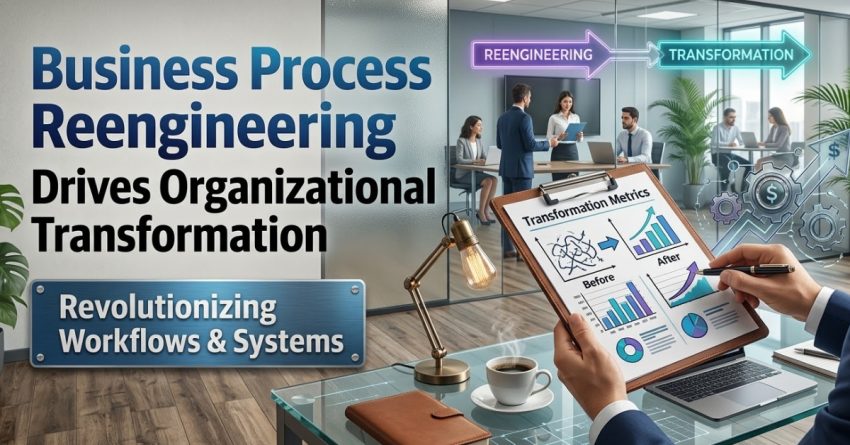
How Business Process Reengineering Drives Organizational Transformation
Companies in the modern world are in a very competitive and dynamic business environment. There is an increasing customer demand, fast-paced technology, and more specific regulatory demands. To remain competitive and efficient, Business Process Reengineering has become one of the fundamental strategies of transformation in many companies. Business process reengineering is concerned with redesigning the…
How Performance Improvement Consulting Improves Working Capital Management
Any business is propelled by working capital. It is an amount of money that is needed to operate the business daily like paying suppliers, stocking and debts. Most businesses make a good amount of revenue, yet they have liquidity problems due to their inability to manage their working capital in the right way. This is…
Why Tier-2 and Tier-3 Cities Are the Next Hotspots for GCCs / GBS
Global Capability Centers (GCCs) and Global Business Services (GBS) have become vital enablers of innovation, digital transformation, and operational excellence for multinational organizations. Traditionally, cities like Bengaluru, Hyderabad, Gurugram, and Pune dominated the GCCs and GBS landscape in India. However, the focus is rapidly shifting. Tier-2 and Tier-3 cities are emerging as the next hotspots…
Retail Store Audit Software for Better Multi-Location Control
With the growth of retail brands in cities and regions, it becomes more difficult to control them. Something that is running smoothly in one or two stores does not necessarily fail when the operations are distributed in many locations. The most frequent obstacles include inconsistent processes, delayed reporting, and low visibility. This is where retail…