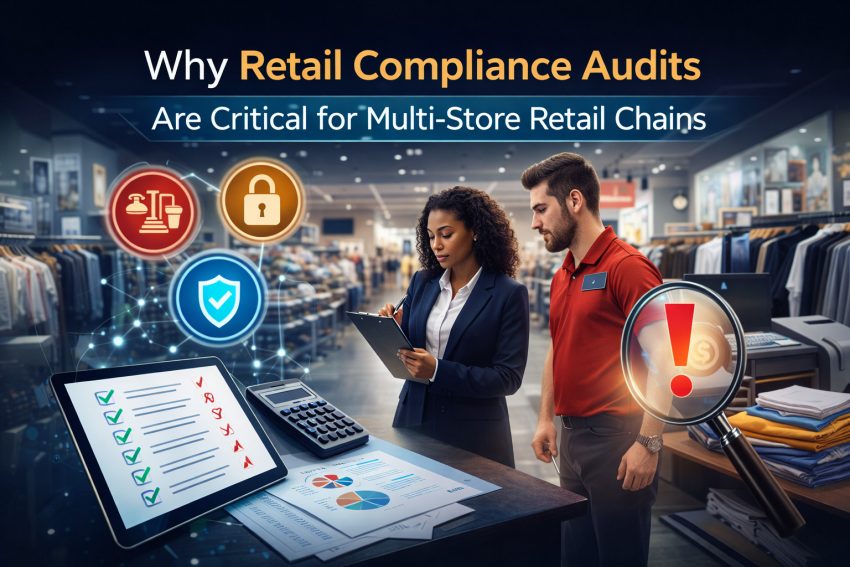
Running one retail outlet is one thing, and controlling two or more stores in different towns would demand much more control and discipline in management and supervision. All the outlets need to be with the same standards regarding customer service, pricing, billing, safety, displaying products, handling inventories, as well as legal standards. Lack of this uniformity impacts on brand reputation, customer belief, and the overall performance. That is why the retail compliance audit is of great importance to the multi-store retail chains.
Ensuring Uniform Standards Across All Stores
Consistency is one of the largest problems facing multi-store retail chains. Whatever the location of customers, they want the same quality of experience. A retail compliance audit is used to make sure that all the stores adhere to the standard operating procedures in the company. It checks how the stores are adhering to display policies, price correctness, cleanliness, standards of customer care, and store activities according to the company policies. This uniformity enhances brand recognition and boosts consumer satisfaction among the sites.
Maintaining Legal and Regulatory Compliance
Retail companies are bound to adhere to different types of law which are relevant to the prices, tax, billing, employment, product labeling and safety requirements among others. In case a business has several stores the risks of non-compliance become even higher. A retail compliance audit assists in the determination of the deficiencies in legal compliance and in making sure that all the outlets comply with the government and regulatory requirements. This does not only save penalties and legal hassles, but it also creates credibility and trust in the running of the organization.
Strengthening Financial Accuracy and Transparency
Managing finances in a few stores implies working with a few billing systems, transactions, cash flow records, and accounting data. Any mismanagement or any error may result in a loss of revenue or fraud or lack of financial consistency. Retail compliance audit evaluates financial processes and validates records and assesses the accuracy of billing. It can reduce financial risks, enhance transparency and make the company have clear and reliable financial picture of every outlet.
Improving Operational Efficiency
A successful retail chain is based on operational discipline. Managing the stock, inventory, and the staff as well as the customers must always be in line with the company guidelines. A retail compliance audit creates awareness of inefficiencies and stores operational gaps. It shows where processes are weak or not carried out in an appropriate manner and aids the management in making corrective action. The effect of this is better running of operations, less waste, and high productivity of all the stores.
Supporting Loss Prevention and Inventory Control
The retail businesses are prone to shrinkage, pilferage, and poor inventory management, particularly when more than one retail outlet is used. A compliance audit of retail involves checking inventory management, storage procedures as well as stock handling processes. It assists in identifying anomalies, allows proper records and encourages discipline in inventory management. This assists the retail chains in securing their assets and minimizing undesirable losses.
Enhancing Customer Experience and Brand Reputation
Ultimately, all retail chains desire satisfied and loyal customers. A retail compliance audit is performed to make sure that each store has well-organized store designs, proper prices, positive employee conduct, and painless billing. By having the same quality in all the branches, the customers gain more confidence and loyalty to the brand. This has made a direct contribution to the improved business performance and growth in the long run.
Helping Management Make Better Decisions
In case of leadership teams, they should have real insights to make informed decisions. A retail compliance audit offers comprehensive reports regarding the performance of every store in compliance, operations, finances, and customer service. These can assist the management to recognize the stores which were performing well, to help the weak stores and formulate more effective expansion and improvement strategies. It also can assist businesses to remain ready to take on challenges.
Also Read: Mystery Audit in Retail: What It Is and Why It Matters