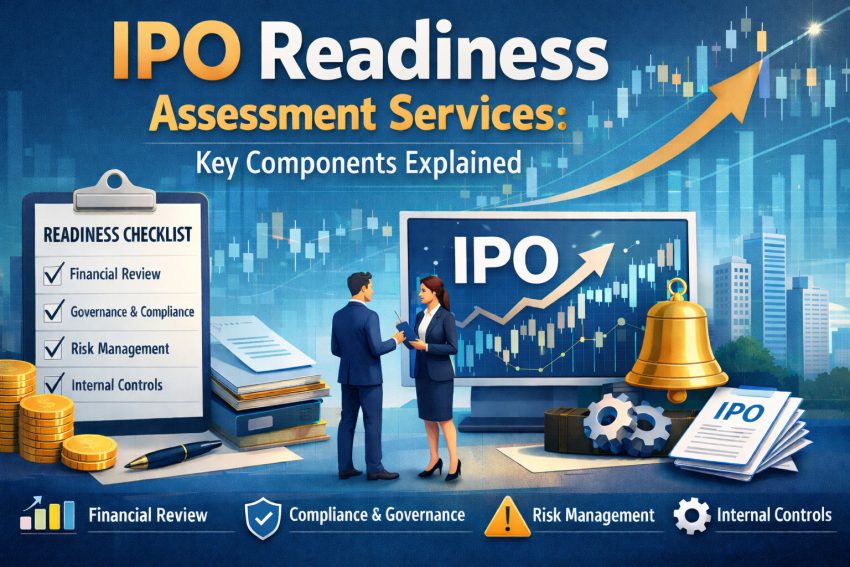
Another milestone in the growth path of a company that is the most transitional one is preparing an Initial Public Offering (IPO). Although access to capital, increased credibility, and scale over a long period are significant benefits of going public, it is associated with high levels of regulatory oversight and stakeholder pressures. IPO readiness assessment services are crucial in this case. These services assist organizations in assessing the ability of its financial, operational, legal and governance structures to withstand public market demands. Learning the major elements of IPO preparedness assessment services may assist organizations in organizing a better and easier move.
Financial Reporting and Accounting Readiness
Financial reporting systems evaluation is one of the most important elements of the IPO readiness assessment services. The accounting standards, disclosure standards, and audit requirements are stricter in the case of public companies. These involve examination of past financial reports, revenue recognition policies, expense categories and consolidation. The evaluation provides that the financial statements are precise, consistent and compliant with relevant accounting models, which facilitates investor trust and approval by the regulatory authorities.
Internal Controls and Risk Management
Publicly listed companies do not compromise strong internal controls. The IPO readiness assessment services examine the effectiveness of internal control systems, such as financial reporting, fraud prevention, and risk mitigation controls. This component determines the weaknesses in the policies, documentation and control testing and assists companies to enhance governance and minimize operational and financial risks prior to the listing.
Corporate Governance Structure
There is transparency, accountability and ethical leadership required by the public markets. The preparation of IPOs is carefully looked at by the IPO readiness assessment services such as corporate governance arrangements, which involve the composition of board, independence of directors, committee structure and decision-making procedures. It is aimed at ensuring that the regulatory requirements and best practices are met and gaining a credible stance among institutional investors and analysts.
Legal and Regulatory Compliance
Meeting the regulatory requirements is a complicated part of going public. IPO readiness assessment services check adherence to corporate legislations, securities laws and regulations, tax regulations, and industry guidelines. This element determines legal exposures, pending litigations, and documenting loopholes that may postpone or halt IPO. Early detection enables the firms to deal with the problems in advance and prevent any last-minute complications.
Operational Scalability and Process Maturity
IPO is not merely a financial phenomenon, but it also puts the organization to the test in terms of the ability to scale its operations efficiently. The IPO readiness assessment services analyze business operations, IT systems, data security and reporting systems to understand the capacity to sustain higher volumes, public exposition, and scrutiny by all stakeholders. This guarantees resilience in operation following the listing and helps in the growth of ambitions in the long term.
Management Readiness and Cultural Alignment
Transition from private to public brings change in culture in the organization. The service of IPO preparation passes the test of the preparedness of the management, the level of leadership, performance indicators, and communication systems. This element is in place to make sure that the leadership teams are in position to manage the interactions with the investors, the expectations of the analysts, and the constant requirement of disclosure so that it develops a culture of accountability and transparency.
Investor Communication and Disclosure Framework
It is essential to have clear and consistent communication in the case of the public market. IPO readiness assessment services come up with sound disclosure practices, investor presentation approaches, and reporting schedules. The component is aimed at harmonizing the messaging with regulatory needs and efficiently presenting the growth story and value proposition of the company to prospective investors.
Also Read: IPO Consulting Services: From Strategy to Successful Listing