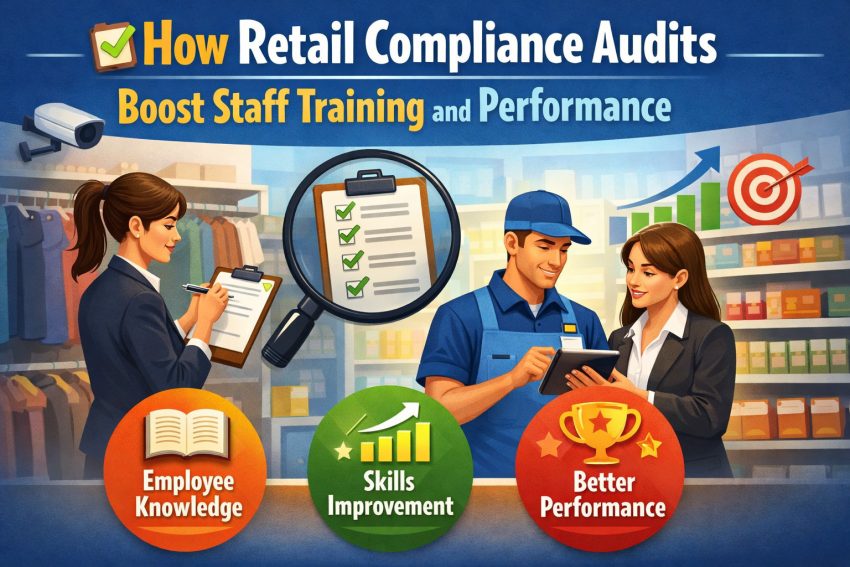
The retail stores rely on their employees to provide them with efficient operations, pleasant service and bill them rightfully daily. Although most individuals would only consider audits as a case of checking the stocks or store policies, there is another significant advantage that has not been well realized. A retail compliance audit is far more than enough to check shelves and the papers, it is, in fact, a way of revealing the significant gaps in the skills of the staff and the ways of enhancing their performance overall.
How Audits Reveal Training Gaps among Retail Staff
The employees in most of the retail outlets learn the job. This is okay with simple tasks but there are numerous tasks that are of importance and must be done. A retail compliance audit outlines aspects in which the staff might lack in key knowledge. This could involve scanning problems in billing counters, misplaced handling of products, price tags mismatch or missing cash register.
Results of these audits help the store in determining the precise areas that require employees to be assisted more. Managers are now able to work on the skills that require improvement instead of offering general training. The targeted training is time saving, more accurate and makes sure that the staff is sure about their positions.
Improving Customer Service through Better Processes
One of the largest strengths of an effective retail store is customer service. Customer experience is however influenced when the staff members lack clarity concerning processes in the store. Some of the problems that a retail compliance audit can spot are slow billing, wrong returns, or confusion when the store is at its peak.
With these insights, the stores will be able to train their employees to deal with customers with ease, handle queues, and billing. With employees having the right process, they will feel more confident and customers will experience faster and better service.
Boosting Staff Efficiency with Clear Checklists
Retail workers must deal with various tasks on a daily basis. From replenishing the shelves to upgrading price tags, every work should be done properly to make the operations run smoothly. A retail compliance audit assists in the development of systematic checklists to be used by the staff.
These checklists facilitate work as they eliminate guesswork. The employees are aware of what, when, and how it should be carried out. This leads to the reduction of errors, increased discipline, and the huge improvement of time management.
Strengthening Team Accountability and Ownership
Staff members should be encouraged to take their work more seriously and that is why it is important that they realize that their work is also reviewed frequently. A retail compliance audit makes one accountable as it points out where a task was done right and where it was not.
This does not cause pressure. Rather, it creates a sense of responsibility and teamwork. Employees start to be more accountable, maintain their areas tidy and become more proactive towards ensuring the standards of the store.
Helping Managers Identify Star Performers and Support Struggling Employees
Retail audits are not only a way of highlighting issues but also indicate who among the staff members is predictable and dependable. This information aids managers to reward good performers, as well as to motivate others. Simultaneously, struggling employees can be provided with further training or instructions.
This will guarantee equal consideration and equal distribution of work. Each one of us receives an opportunity to develop according to our actual performance and not what is thought of us.
Creating Long-Term Improvements in Store Operations
Long-term improvement is the greatest effect of a retail compliance audit. By having improved training, more definite processes and stronger staff employees, the entire performance within the store improves. Employees commit less error and are more effective in dealing with customers and organize the store in a better system.
These enhancements assist the store to develop consistency, complaints minimization, and the development of a superior shopping environment. Most importantly, employees feel more competent and appreciated and this boosts morale and lowers turnover.
Also Read: Retail Audits: A Key to Consistent Store Performance